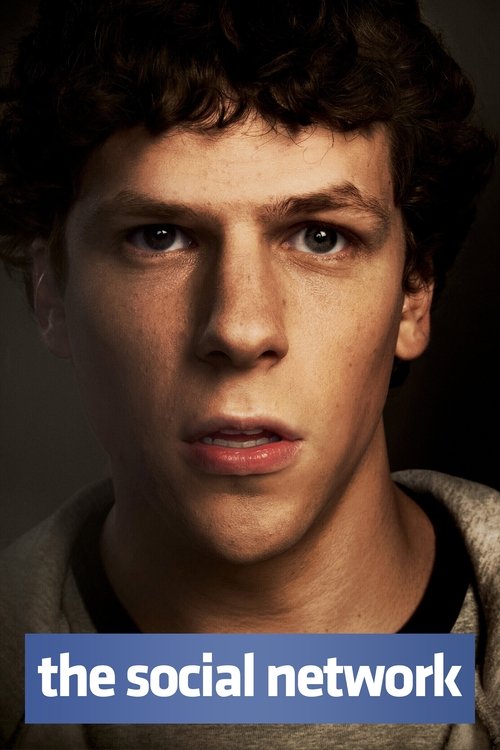
Spoiler Warning
This article contains major spoilers for The Social Network (2010).
So what actually happens at the end?
The Social Network ends with Mark Zuckerberg alone in a Palo Alto conference room after both depositions have wrapped, sending a friend request to Erica Albright on the Facebook page he built, then refreshing his browser over and over to see whether she has accepted. Marylin Delpy, the second-year associate from Mark's defence firm whom Aaron Sorkin invented as the film's structural witness, packs her files and pauses on her way out to deliver the closing diagnosis: he is not actually an asshole, he is just trying so hard to be one. Both lawsuits resolve in parallel rather than in court. Title cards confirm that the Winklevoss twins and Divya Narendra settle the ConnectU intellectual-property claim for a reported $65 million, and that Eduardo Saverin's name is restored to the Facebook masthead as a co-founder under undisclosed terms. Neither resolution is dramatised as a courtroom payoff — Sorkin's structure delivers them as captions over the deposition's closing image, so the legal noise drops away and the only sound left is the cursor click. David Fincher holds the shot on Jesse Eisenberg's face while Trent Reznor and Atticus Ross's piano cover of 'Baby, You're a Rich Man' rises on the score. There is no triumph beat. Mark is the youngest billionaire in the world, the company he wrote on a Thursday in February has reached half a billion members in 207 countries, and the screen he is staring at is the same screen the audience has been staring at for two hours. The friend-request reload is the film's argument compressed into a single keystroke: the product was built around the social wound, and the wound is still open.
Plot recap leading into the ending
The Social Network is a 2010 American biographical drama film directed by David Fincher and written by Aaron Sorkin. Based on the 2009 book The Accidental Billionaires by Ben Mezrich, the film portrays the founding of the social networking website Facebook. It stars Jesse Eisenberg as Facebook founder Mark Zuckerberg, with Andrew Garfield as Eduardo Saverin, Justin Timberlake as Sean Parker, Armie Hammer as Cameron and Tyler Winklevoss, and Max Minghella as Divya Narendra. Neither Zuckerberg nor any other Facebook staff were involved with the project, although Saverin was a consultant for Mezrich's book.
Timeline of the reveal
Eduardo's dilution is named on the record
The deposition cuts to a clean voiceover summary: Eduardo Saverin's share of Facebook was diluted from roughly 34% to 0.03% in the Sean Parker-engineered Series A signing, while every other founder's stake was held whole. The framing deposition is the moment that maths becomes legally legible. Eduardo, across the table from Mark, has been asking for the credit, not the equity, since the suit began.
Winklevoss twins settle for $65 million
Cameron and Tyler Winklevoss, with Divya Narendra, accept a reported $65 million settlement for the ConnectU claim that Mark stole the social-directory idea Harvard Connection had been built around. The figure arrives as a title card over the closing deposition image, refusing the courtroom payoff the suit had been promising. Sorkin's structure litigates the question of whether the IP claim is the right frame, not whether it is the correct verdict.
Eduardo's settlement restores the masthead
Saverin's separate undisclosed settlement returns his name to the Facebook masthead as a co-founder. The captioned resolution is the only victory the screenplay grants him, and the only one he had actually asked for: not equity, but inclusion in the origin story the company is going to tell about itself.
Marylin Delpy reads the room
The second-year associate Mark has mostly ignored across two depositions packs her files. She has watched him perform indifference at two opposing tables for the length of the film. As she leaves she stops and tells him, in plain terms, that he is not an asshole — he is trying so hard to be one, which is a different problem. The line bookends Erica's opening verdict from the bar scene.
Mark sends Erica the friend request
Alone in the empty conference room with his laptop, Mark opens Facebook, searches for Erica Albright, lands on her profile, and clicks Add Friend. The cursor stops. He waits. The page does not update.
Refresh, refresh, refresh
Mark refreshes the browser. Then again. Then again. Trent Reznor and Atticus Ross's slow cover of 'Baby, You're a Rich Man' lifts under the trackpad click. Closing title cards announce 500 million members in 207 countries, the $65 million Winklevoss settlement, the Saverin masthead restoration, and Mark Zuckerberg as the youngest billionaire in the world. The film ends on the keystroke loop.
Character motivations
Mark wants the verdict Erica delivered in the opening scene to be revisable. The film has been showing for two hours that the company is the apparatus he has been building to make the original verdict obsolete. The friend-request refresh is the same gesture as the FaceMash blog post, scaled across a billion users and reduced to a single addressee, and it is the gesture the entire third act is engineered to deliver.
Eduardo is the only character whose stake in the lawsuit is the friendship rather than the money. His complaint is not the dilution number, it is the night Mark signed restructured papers in Palo Alto while Eduardo was in a New York hotel believing they were still partners. The restored masthead credit in the closing title card is the only thing he actually came to the deposition to win.
Sean has lost Napster and been pushed out of Plaxo, and treats Facebook as the third attempt to be inside the room before the lawyers arrive. The Victoria's Secret anecdote, the suspicion of investors, the championship of the dropped 'The' — all of it is one continuous argument that the founder must hold the product alone for it to scale. The Stanford-house cocaine arrest is the engineered exit Eduardo's lawsuit has been waiting for.
The twins want to win by the rules of the institution they were born into. Their refusal to bring physical retaliation to the dispute, even after the FaceMash and post-launch provocations, is the film's clearest theme statement: they lose the analogue race because they treat Harvard as the adjudicator, and Mark has already noticed that Harvard is no longer adjudicating anything that scales beyond the Charles.
Marylin is the only character in the third act whose stake in Mark is professional rather than personal. She has watched two depositions, she has read the discovery, and she has decided the legal verdict is the wrong frame for the person she has just spent two days watching. Her exit line is not an accusation — it is a diagnosis, delivered without anger, and the silence she leaves behind in the room is the cue for the keystroke that ends the film.
The final scene
The closing scene is staged with almost no movement. Marylin gathers her files at the conference-room table. Mark, on the other side of it, has the laptop open and is half-watching her leave. She stops. She tells him that the prosecution is going to keep painting him as the devil their creation myth needs, but that she has read the discovery and she thinks he is not actually that — he is trying so hard to be that, which is a different and more recoverable condition. She leaves. The door closes. The room is empty except for Mark and the laptop. There is no scoring under her line. The silence holds for a long beat after she is gone, which is what gives Mark the space to do what he does next. He pulls the laptop closer. He opens the search field on the website he built — the website that has been hovering at the edge of every scene in the film as both the engine and the receipt of his life. He types Erica Albright's name into the bar. He lands on her profile, the same one she has had since college, and he clicks Add Friend. Then he sits back. He refreshes. Nothing. He refreshes again. Nothing. He refreshes a third time. The piano cover of 'Baby, You're a Rich Man' rises slowly under the trackpad click. Title cards arrive over his face: 500 million members in 207 countries, the youngest billionaire in the world, the Winklevoss settlement, the Saverin settlement. Fincher holds on him refreshing the browser through all of it. He does not check his phone. He does not call his lawyers. He does not look at the door Marylin walked out of. He looks at the page he built around the version of Erica Albright that lives inside it, and he asks it whether she has accepted yet. The argument the film has been making for two hours collapses into the gesture. The social product is the substitute for the social capacity that produced it. The thing he made to find her is the thing standing between him and finding her. The page does not update. Fincher cuts to black on a face that has stopped reading as defiant and started reading as recognisable — a person waiting, in real time, for a notification that may never come.
Symbolism
Drawing on Roger Ebert's review (RogerEbert.com) and Ian Nathan's Empire review.
The symbolism of The Social Network is built around four images that Fincher and Sorkin return to with deliberate frequency: the oar at the Henley regatta, the chicken in Eduardo's animal-husbandry punch task at the Phoenix Club, the F-key refresh on the closing laptop, and the empty chair across from Mark at each deposition. None of these images carries its meaning the first time it appears. The film teaches the audience to read them by re-staging them under different conditions until the pattern is unmistakable, and by the closing keystroke the pattern is what the audience is watching even when the camera is technically only watching a cursor.
The oar at Henley
The Winklevoss twins' rowing sequence on the Thames is the only set-piece in the film that takes Fincher and editor Kirk Baxter outside the depositions, dorm rooms, and bars that contain the rest of the action. Cameron and Tyler are favoured to win and lose the Henley Royal Regatta final by a deck length to a Dutch crew — the closest possible margin, on the most established American-elite course in the world. The oar is the symbol because it is the literal instrument of an established meritocratic ritual. You train, you pull, you cross the line, and an institution founded in the nineteenth century hands you the medal. The twins, in their pre-race conversation at the boathouse, have just decided not to physically retaliate against Mark for taking their idea, on the grounds that they are Harvard gentlemen. They lose the race by inches. The oar dramatises the film's central proposition about analogue institutions in the digital era: the rules the twins are still operating under are, by the time the rest of the film is happening, no longer the rules the game is being scored by. Their loss on the water is the film's preview of their loss in the deposition.1 The Henley sequence is also the only scene in the film where Fincher allows the camera real exterior light and air, which makes the architectural contrast with the screen-lit interiors of Mark's life unmistakable. The Winklevoss world is outside in the open. Mark's world is indoors at a desk.3
The chickens
The animal-husbandry punching task at the Phoenix Club, in which Eduardo is asked to take care of a live chicken for a week and to feed it constantly, becomes one of the film's load-bearing visual jokes and eventually the basis for a Crimson story headlined Saverin: Chicken Cannibal. The chicken is the symbol of the institutional ladder Eduardo is still trying to climb at the moment when Mark, in California, is climbing a different ladder altogether. The Phoenix pledge process is the analogue ritual of access that Eduardo, son of a Brazilian businessman, has correctly identified as the route into the room where the people who matter at Harvard actually sit. The fact that he is feeding a chicken in a dorm while Mark is in Palo Alto having lunch with Sean Parker at a Stanford-adjacent steakhouse is the gap the third act litigates. The chicken is also the symbol the Crimson uses against him — when the story breaks, Eduardo has spent his social capital on a ritual that has, in the same news cycle, made him a liability rather than an asset to the company he founded. The chicken is the image of Eduardo trying to win the game he was born into while Mark is busy inventing a new one.
The F-key refresh
The browser refresh that closes the film has been seeded throughout the screenplay. Mark refreshes the Kirkland House dormitory network traffic graph in the opening night sequence when FaceMash goes viral — the refresh is the moment he first registers what a twenty-two-thousand-hit night feels like on a server he wrote himself in eight hours. He refreshes the early TheFacebook signup count later that same year. By the final shot, the refresh is no longer a tool for measuring scale; it is an interface for soliciting one specific human response from one specific person who is, the film has spent two hours arguing, never going to provide it. The keystroke is the symbol of the founder's relationship to the product: the same gesture that built it is the gesture he cannot stop performing on top of it. The cursor click is the same click. The page is different. The argument the film makes in the closing shot is that, for Mark, the difference between those two clicks is small enough to disappear, and that this is the cost the company has not learned how to invoice.
The empty chair across the deposition table
Sorkin's structural choice — to stage the depositions as the film's spine — produces a visual symbol Fincher returns to at nearly every act break: a wide shot of a long table with Mark on one side and an opposing claimant on the other, the empty chair between them indicating either a witness yet to arrive or a relationship that used to occupy that seat. The chair becomes the symbol of every relationship Mark has metabolised into the product. Eduardo's chair is the most legible — the framing deposition is the moment the audience realises Eduardo is now suing the friend who was, in flashback, sitting where the opposing counsel is sitting. The Winklevoss chair carries a different weight, the institutional one. By the time Marylin gathers her files and stands up, the chair she is leaving is the last chair in the film with a human in it. The shot that follows is the closing one, and the empty chair across from Mark is finally and literally empty, and what fills the silence the empty chair leaves behind is the keystroke.
Themes
Drawing on Todd McCarthy's Variety review and Jose Antonio Vargas profile (The New Yorker).
The themes of The Social Network are four, and they nest inside one another: friendship as the casualty of partnership; intellectual property as the wrong question; the high-functioning loneliness that platform-building both reveals and entrenches; and the structural use of women — particularly Erica Albright's exit and Marylin Delpy's exit — as the brackets that contain the male competition the film is ostensibly about. Each theme is staged in the depositions, tested in the flashbacks, and finally compressed into the closing keystroke.
Friendship versus partnership
The film's emotional centre of gravity is the slow decoupling of Mark and Eduardo, which Sorkin stages as the difference between a friendship and a corporate partnership operating under the cover of a friendship. Eduardo is the CFO because he wrote the original thousand-dollar cheque and because he is Mark's only real friend at Harvard. He is also, by the New York signing scene, the obstacle to the Sean Parker plan, because he has been treating the company as the social object their friendship rotates around rather than as the platform Parker can already see it becoming. The dilution sequence — the documents signed at one in the morning in Palo Alto while Eduardo is in New York interviewing for a summer internship he no longer needs — is the most precise dramatisation in the film of the moment a friendship is restructured into an asymmetric contract. The fact that the restructuring is legally sound is the thematic point. The friendship was never going to survive the partnership; Sorkin is interested in the question of which of the two of them already knew that, and when, and which one was still operating under the assumption that the other was operating under the same assumption.2
Intellectual property as the wrong question
The Winklevoss case hinges on whether Mark stole the idea for Facebook from Harvard Connection. The film stages this question only to refuse it. Sorkin's strongest piece of writing on this is Mark's deposition reply about the chair — that a guy who builds a better chair does not owe royalties to everyone who has ever built a chair, even if the better chair would not exist without the older one. The line is a feint. The film's actual position is not that the idea was original but that the idea was the wrong unit of measurement. Facebook is what it is because Mark wrote it on a Thursday night in February while drunk and blogging about Erica Albright, not because anyone had a directory concept earlier. The themes the film cares about are upstream of the IP question entirely. The $65 million settlement is the title card precisely because the title-card placement is the screenplay's verdict on how much narrative weight the IP claim deserves: enough to settle for, not enough to litigate, because the question the depositions have been asking is not the question the film is answering.
The high-functioning loneliness of platform-building
Fincher's direction of Eisenberg's performance is the through-line for this theme. Mark in the film does not stop building. He is coding in the opening scene at the dorm desk, coding through the FaceMash sequence, coding at the Kirkland House desk while Eduardo brings him jacket-and-tie clothes for the Phoenix punch event, coding at the Palo Alto rental house while Sean Parker runs a party around him, coding even during the deposition when he asks the opposing counsel whether he should be paying attention. The loneliness is not depicted as misery. It is depicted as a state of high productivity that the surrounding social architecture has been built to enable. The Sean Parker pitch about the Stanford houses, the Victoria's Secret anecdote, the dropped 'The' — all of it is one continuous argument that the founder must remain the lonely centre of the product for the product to scale at all. The third act tests the proposition by isolating Mark in the deposition room and showing that the same condition that produced the platform is the condition the platform cannot relieve. The friend request to Erica at the end is the experiment that closes the loop. The keystroke is the data point.7
Women as structural brackets
The film has been criticised on the surface for the thinness of its female characters, but the criticism reads the choice as accident rather than design. Erica Albright drives the entire film by leaving in the opening scene; she does not reappear until she is the named target of the closing friend request. Marylin Delpy enters in the third act and exits with the film's final line. Christy Lee, the Asian-American Harvard girlfriend Eduardo dates after a Facebook-launch party, drives the burning-scarf scene that catalyses Eduardo's loss of Sean Parker's confidence. Each of the women functions as a structural bracket — an entrance that frames a section, an exit that closes one, a turn that bends the male-competition arc. The film's argument is that the male competition the audience has been asked to track is the entire content of the screen but not the entire content of the story; the women are the parentheses inside which the competition is staged, and the closing image — Mark refreshing a screen for a notification from one of those women — is the screenplay's quietest claim that the bracket was load-bearing all along.
Final shot interpretation
Drawing on Fincher and Sorkin (Xan Brooks, The Guardian), Trent Reznor on the score (Linda Wertheimer, NPR), and Christopher Orr's Atlantic review.
The final shot of The Social Network is a slow zoom on Jesse Eisenberg's face as he refreshes the Facebook profile of Erica Albright in an empty Palo Alto conference room. Marylin Delpy has just left. The depositions have wrapped. Trent Reznor and Atticus Ross's piano cover of 'Baby, You're a Rich Man' rises under the trackpad click.5 The frame holds for what feels much longer than it is — it is roughly forty seconds — and the camera does not cut away. The argument Sorkin and Fincher have been building for two hours collapses into the gesture in that frame, and the gesture is small enough that it requires the entire preceding film to read.
The refresh as compulsion
The keystroke is borrowed from the film's own visual vocabulary. The first refresh in the screenplay is the dorm-network traffic graph in the FaceMash sequence; the second is the early signup counter on TheFacebook; the third and fourth are scattered through the launch sequence as Mark watches school after school come online. By the closing shot the refresh has been re-coded — it is no longer an analytic tool for the founder, it is a behavioural loop the founder is now inside. Fincher's framing — locked-off camera, Eisenberg's eyes scanning the same fixed coordinate on the screen, no insert of what the laptop is actually showing — denies the audience the satisfaction of seeing whether the request has been accepted. The refusal is the point. The shot is structured to make the audience aware that they are watching the same thing the product was built to do: the page is loading, the notification has not arrived, the user is still here. By withholding the cut to the screen, Fincher converts the audience into Mark, which is the only conversion the closing argument actually needs.
The argument compressed into a gesture
Sorkin has said the screenplay is structured around the proposition that Facebook was built because of one specific moment of social rejection at the Thirsty Scholar bar in the opening scene — Erica's breakup. The final shot is the test of the proposition. If the platform Mark built is, at its origin, the product engineered to recover from the loss of Erica Albright, then the closing image must put the platform and the loss in the same frame. The friend-request gesture is the screenplay's mechanism for delivering both at once. Mark is using the most successful social product in human history to perform, in private, the smallest possible version of the social move he could not perform in person two years earlier. The product has scaled by nine orders of magnitude. The move has not changed. The audience is watching the founder of a half-billion-user network using the network to send a friend request, and the network is not answering. Whatever Erica thinks of him, the platform cannot extract it. Whatever the company has solved, it has not solved the original problem.
The aperture Mark was looking through
Sorkin and Fincher's quiet argument across the third act is that Facebook is not a network Mark built and then sits inside; it is an aperture he was looking through, and the company is what congealed around the aperture. The closing shot makes the argument visually. The camera is positioned roughly where the laptop screen would be looking back. Mark is not in the audience's position relative to the page — he is in the page's position relative to Mark. The shot frames him the way a webcam frames a user. Reznor and Ross's score, a slow string-and-piano cover of a song originally about a man who has become wealthy by detaching from the people he loved, plays under the image. The pairing is unsentimental. The screenplay is not concluding that Mark deserves the loneliness or that the platform is responsible for it; the screenplay is concluding that the loneliness is the engine and the platform is the by-product, and that the audience has spent two hours watching a person convert one into the other. The platform is the negative-space mould of the founder's social capacity. The closing shot makes the mould visible.46
Why Marylin's line is the cue
The reason Marylin's exit immediately precedes the refresh is structural. She is the only character in the film who diagnoses the protagonist without litigating him. Her line — that he is not an asshole but is trying so hard to be one — gives the audience the analytical frame in plain English just before the closing image asks them to see Mark as something other than the cartoon the press cycle had already settled on by the time the film was released. The two-beat structure is: a clinical sentence from a neutral observer, then forty seconds of evidence. The film is not interested in absolving Mark. It is interested in the more uncomfortable proposition, which is that the platform was built around an aperture Mark himself was looking through, and that the aperture has never closed, and that the refresh keystroke on the laptop in the conference room is the gesture by which it remains open. The cursor clicks. The page does not update. Fincher cuts to black on the user, not on the screen.
Back to the full movie guide
Plot, cast, where to watch, and similar films — without spoilers.
Open guide →Frequently Asked
Did Mark Zuckerberg actually steal Facebook from the Winklevoss twins?
The screenplay deliberately refuses to answer the question in that form. Sorkin frames the case as one in which the Winklevoss brothers and Divya Narendra had an idea for a Harvard-only social directory called Harvard Connection, and hired Mark to write the code, after which he stopped responding to their emails and built his own thing on a different schema. Whether the second thing was the first thing with the serial numbers filed off is a question the depositions in the film deliberately never resolve. The $65 million settlement is delivered as a title card rather than as a verdict, which is the whole structural point — Sorkin is not litigating the IP claim, he is staging the gap between origin story and outcome.
Who is Marylin Delpy and is she based on a real person?
Marylin Delpy, played by Rashida Jones, is the second-year associate from Mark's defence firm who sits in on both depositions and delivers the film's final line. She is a composite character invented for the screenplay, not a documented participant in either lawsuit. Sorkin uses her structurally — she is the only character in the third act with no economic, romantic, or institutional stake in Mark, which makes her the only voice that can read him to the audience without the audience suspecting the read. Her exit line is the diagnostic the film has been building toward since the opening bar scene, and it is delivered in plain English so the closing image can do its work in silence.
What is the significance of Erica Albright in the ending?
Erica is the Boston University sophomore who breaks up with Mark in the opening scene, telling him that women will not avoid him because he is a programmer but because he behaves like an asshole. The blog post he writes about her that night, and the FaceMash hot-or-not site he codes in retaliation, are the chain reaction that produces Facebook. The film closes with Mark sending Erica a friend request and refreshing the page for an answer because she is the original aperture the product was built around. The structural argument is that the company is, at its core, a tool engineered to recover one specific lost connection that its founder is constitutionally unable to recover.
What does the closing title card about 500 million members mean?
The closing title cards announce that Facebook has reached 500 million members in 207 countries and that Mark Zuckerberg is the youngest billionaire in the world. Fincher overlays the cards on Mark's face as he refreshes the browser. The juxtaposition is the film's closing argument compressed into one frame — the scale of the platform he built and the scale of the loneliness it has not fixed share the same shot. The captions are pegged to the 2010 release window and are presented without commentary because the commentary is the image they sit on top of: the founder of a global social network unable to retrieve one specific notification from one specific person on it.
Why does the film keep cutting back to the depositions?
Sorkin uses the two parallel depositions — the Winklevoss case in one room, the Saverin case in another — as the framing device for almost every flashback in the film. The structural choice has two payoffs. It lets the same event be described twice by two opposed witnesses, which embeds the question of reliable narration into the form. And it puts Mark in a chair for the entire runtime, listening to other people tell the story of his life back to him, which is the only situation in which his refusal to perform reaction becomes legible as a character trait rather than as a writing decision the audience has to accept on faith.