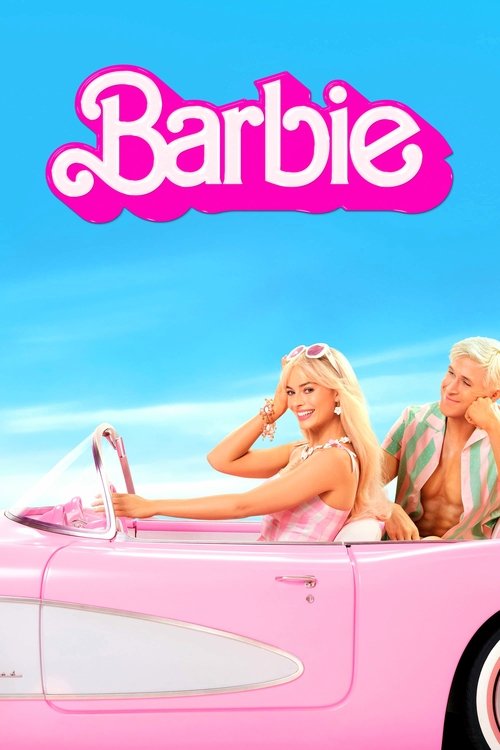
Spoiler Warning
This article contains major spoilers for Barbie (2023).
So what actually happens at the end?
Barbie (2023) ends with Stereotypical Barbie choosing to leave Barbie Land to become a human in the real world, sent off by the ghost of Mattel co-founder Ruth Handler. After helping the Barbies overthrow Ken-dom and restore matriarchal Barbie Land — though now with the awareness that neither extreme is just — Margot Robbie's Barbie tells Ruth she doesn't want to be the idea anymore; she wants to be the one doing the imagining. Ruth answers that humans only have one ending and ideas live forever, then takes Barbie's hands and shows her a montage of real girls and women laughing, crying, ageing, and existing as themselves, scored to Billie Eilish's 'What Was I Made For?' Gloria, Sasha, and Gloria's husband then drive Barbie to a destination she has chosen for herself. She walks up to a reception desk, gives her name as 'Barbara Handler' — Ruth Handler's actual daughter, the girl Barbie was originally named after — and, with a beaming smile, announces, 'I'm here to see my gynecologist.' The mic-drop punchline lands as the literal first moment of an embodied female life: a doll without genitals becoming a woman with a body that needs care, which Greta Gerwig has framed as the film's whole emotional argument compressed into a one-liner.[^1][^2] Ken's separate arc resolves quietly: he is not punished for staging the patriarchy coup, only allowed to discover that he is 'Kenough' without Barbie's gaze defining him. The two main throughlines therefore close on the same thesis — selfhood is the thing you walk into the doctor's office for, not the role someone else has cast you in.
Plot recap leading into the ending
Barbie is a 2023 satirical fantasy comedy film directed by Greta Gerwig from a screenplay she wrote with her husband, Noah Baumbach. Based on the fashion dolls by Mattel, it is the first live-action Barbie film after numerous animated films and specials. Starring Margot Robbie as the title character and Ryan Gosling as Ken, the film follows them on a journey of self-discovery through Barbieland and the real world following an existential crisis. The supporting cast includes America Ferrera, Michael Cera, Kate McKinnon, Issa Rae, Rhea Perlman, and Will Ferrell.
Timeline of the reveal
Barbie and Gloria break the Barbies out of brainwash
Gloria delivers her speech about the impossible double-binds of womanhood. The monologue snaps each brainwashed Barbie back into self-awareness — they remember they were doctors, presidents, Nobel laureates, not Ken's accessories. The Barbies start to plan their counter-coup.
The Kens go to war on the beach
The Barbies pit the Kens against each other by playing on their jealousy. The Kens charge into an absurd choreographed beach battle — arrows, surfboards, an 'I'm Just Ken' dance number — which removes them from the Constitution-rewriting session just long enough for the Barbies to vote Barbie Land back to its matriarchal default.
Ken cries; Barbie tells him to find out who he is without her
Ryan Gosling's Ken finally admits that 'beach' is not actually who he is and that he has never had a self outside of being Barbie's boyfriend. Barbie tells him he is 'Kenough' as he is. The film resolves his arc not by punishing the patriarchy attempt but by removing the gaze that produced it.
Barbie meets Ruth Handler in a white-light interstitial
The ghost of Mattel co-founder Ruth Handler appears and sits with Stereotypical Barbie in a glowing, edge-of-Barbie-Land space. Barbie says she doesn't want to be the idea anymore — she wants to be the one doing the imagining. Ruth answers that humans have only one ending but ideas live forever.
The "feel" montage
Ruth takes Barbie's hands and tells her to 'feel'. The screen fills with home-video footage of real girls, mothers, and grown women across a life cycle, scored to Billie Eilish's 'What Was I Made For?' This is the moment Barbie chooses to become human — the film's emotional thesis, not its joke.
"I'm here to see my gynecologist"
Gloria, Sasha, and Gloria's husband drop Barbie at a building that reads like an office. At the reception desk Barbie identifies herself as Barbara Handler — Ruth's real daughter's name — and announces, beaming, that she is there to see her gynecologist. Cut to black.
Character motivations
Barbie has spent the film discovering that the doll-perfect script — same morning, same wave, same Ken — is a kind of pleasant non-life. Her ending choice is not about rejecting Barbie Land but about wanting to be the subject rather than the object of a story. She chooses human mortality and a body that needs a gynecologist because that is what it costs to be the one doing the imagining.
Ken's arc is not about defeating patriarchy from the outside; it is about him realising he never had a self underneath the boyfriend role. He cries on the beach because no one has ever asked him who he is. The 'Kenough' hoodie at the end is not ironic — it is the film letting him exist as a person rather than as Barbie's accessory.
Gloria is the human whose grief reactivates Barbie's existential crisis and whose monologue de-programmes the brainwashed Barbies. Her motivation is to give her daughter Sasha a less impossible script than the one she inherited. Pitching 'Ordinary Barbie' to Mattel at the end is her way of saying mothers also deserve a doll that does not require perfection.
Ruth is the ghost-author of Barbie and, in Gerwig's framing, the mother whose actual daughter Barbara is the source of the doll's name. Her motivation at the white-light meeting is to grant Barbie the consent the doll never originally had: permission to become a person, with a body, who can choose her own ending rather than be authored forever.
Sasha begins the film as the teenager who weaponises every cultural complaint about Barbie — fascism, body image, consumerism — and ends it as the daughter who watches her mother be the one with the answers. Her shift is what lets Gloria's monologue land: the next-generation viewer giving the older generation permission to still believe in the doll.
The final scene
The film's closing scene is a deliberate anticlimax. After the multiverse-sized stakes of Ken-dom and the white-light goodbye with Ruth, Gerwig drops Barbie into the most ordinary scene the film could possibly stage: a car ride to a strip-mall medical office. Gloria, Sasha, and Gloria's husband Allan-coded husband chat at her in the front seat the way real families chat at someone on the way to a routine appointment. The framing flattens — no Dreamhouse pinks, no Mattel headquarters chrome — and the colour palette quietly tells the audience Barbie is now in the same registered-as-real world the human characters have occupied the whole film. She approaches a reception desk. The receptionist asks her name. 'Handler, Barbara.' The reception desk does not react; it is, the film implies, a Tuesday. Then comes the line Gerwig has said came to her 'in a dream' and could 'be no other way' — 'I'm here to see my gynecologist!' — delivered by Margot Robbie with the open, unguarded joy of someone announcing a graduation rather than a pelvic exam.[^1][^2] Gerwig has been explicit about why she stages the moment this way. In Variety she said she wanted the ending to operate on at least two levels — a mic-drop joke and a real emotional statement — and tied it to her own adolescence: 'When I was a teenage girl, I remember growing up and being embarrassed about my body... And then to see Margot as Barbie, with this big old smile on her face, saying what she says at the end with such happiness and joy. I was like, if I can give girls that feeling of, Barbie does it, too — that's both funny and emotional.'[^1] The closing image is therefore the inverse of the cold-open Kubrick monolith: instead of a giant plastic Barbie towering over little girls with baby dolls, the film leaves us with a fully human Barbie walking, on her own two feet, into a doctor's office for a body that now exists. The final cut to black happens before the appointment; the film refuses to spectacularise what happens next. The point is the smile, the name on the clipboard, and the consent.
Symbolism
Drawing on Greta Gerwig in Variety on the gynecologist final line, Greta Gerwig in CinemaBlend on the 2001 homage, Greta Gerwig in Rolling Stone on Barbie as a mother-daughter story, TIME on Ruth Handler and the real Barbara, and Greta Gerwig in E! News on the Billie Eilish montage.
The symbolism of Barbie (2023) runs on three interlocking visual systems: the Kubrick monolith opener that frames Barbie as a tool that ended baby-doll girlhood, the colour-coded geography of Barbie Land versus the real world, and the gynecologist line that gives the doll a body. Greta Gerwig's Barbie is a symbol-dense film disguised as a toy commercial, and most of its emotional argument is carried in the way physical objects, environments, and even body parts move between symbolic registers.
The 2001 monolith and the death of the baby doll
The film opens with a shot-for-shot homage to the 'Dawn of Man' sequence from Stanley Kubrick's 2001: A Space Odyssey: a barren landscape of little girls listlessly playing with baby dolls, narrated by Helen Mirren, until a colossal Barbie appears as the monolith. The girls smash their baby dolls. Greta Gerwig has been candid in interviews that she hesitated to open her blockbuster with a Kubrick parody — 'I did have a moment of like, am I really going to start this movie with a 2001 parody? But I ended up talking it through with my therapist and she thought it was hilarious' — and that the crew rebuilt the set, used the same film plates, and shot the homage with what she called 'utmost integrity and excellence.'3 The symbolic argument is doubled: Barbie is positioned as the technological leap that ended the era when girls were trained, by their dolls, to rehearse motherhood. The smashed baby doll is the film's first thesis statement.
Barbie Land's pink geography as the doll's-eye view
Barbie Land is staged in saturated pinks, scaled-down practical sets, and a flat horizon-less daylight that has no shadow because dolls cast no shadow. The Mattel-designed Dreamhouse has no walls because a doll's house has no walls; the shower has no water because a doll has no body to wash. Each missing thing is symbolic: every absence in Barbie Land is exactly the thing Barbie ends up choosing in the gynecologist scene. The colour grading darkens the moment she crosses to Venice Beach; the real world is washed-out, full of shadow, and full of body. The two worlds function as before-and-after panels in the same argument about embodiment.
Cellulite, flat feet, and the broken heel
Stereotypical Barbie's crisis is triggered by symptoms — thoughts of death, cold morning shower, burnt toast, cellulite, flat feet — that are all, symbolically, the body becoming visible. The flat-foot gag, played for laughs, is structural: in Barbie Land the doll cannot put her heels down because she is moulded to fit a shoe. The moment her feet flatten, she becomes physically incompatible with the geography of the place that produced her. The same gag returns at the very end, when she walks in actual flat shoes through an ordinary parking lot toward the doctor's office.
Ruth Handler's hands and the 'feel' montage
When Ruth Handler — played by Rhea Perlman as a quietly ailing grandmother — takes Barbie's hands and tells her to 'feel', the film cuts to a montage of home-video footage of real girls and women across a life cycle, scored to Billie Eilish's 'What Was I Made For?'47 The montage is symbolic in the literal sense: it shows Barbie what a life she has never had looks like from the inside. Hands as the symbol matter because the doll's hands are the part of Barbie that has always touched the world second-hand, through a child's manipulation. Ruth giving Barbie consent through her hands is the symbolic moment the doll is allowed to author her own touch.
The Mattel boardroom of men
The film stages the inverse symbol of Barbie Land in the Mattel C-suite: a long, dark conference table populated entirely by men in suits. Will Ferrell's CEO is the visual punchline, but the symbol is the room — the place where the doll's image is actually authored is a room with no women in it. The film never lets the audience forget that Barbie Land's matriarchy is the dream and the boardroom is the waking world. Gerwig's choice to make the corporation the antagonist rather than Ken is structural: patriarchy in the film is not the boys on the beach, it is the suits in the room.
The gynecologist line as the final symbol
The closing line gives the doll a body. Barbie has spent the film as a smooth-bodied object; the gynecologist visit is the literal acceptance of a body that bleeds, ages, and requires care. Gerwig has framed the line as the symbol that consolidates everything else: 'There's something where the levity and the heart come together... if I can give girls that feeling of, Barbie does it, too — that's both funny and emotional.'1 The line works as a symbol because every preceding absence in Barbie Land — no genitals, no menstruation, no doctor's visit — is what the line finally fills in.
Themes
Drawing on Greta Gerwig in Variety on the gynecologist final line, Greta Gerwig in Rolling Stone on Barbie as a mother-daughter story, Women's Media Center on Gloria's monologue and patriarchy, TIME on Ruth Handler and the real Barbara, and UC Boulder Arts & Sciences Magazine on the Ken arc.
The themes of Barbie (2023) are three: the impossibility of the modern womanhood script, patriarchy as something that hurts the men inside it as much as the women outside it, and motherhood as the actual hidden engine of the Barbie myth. Greta Gerwig and Noah Baumbach built the film around three connected arguments about gender, and each is carried by a specific character relationship rather than asserted in dialogue.
The impossible script of being a woman
The film's most-quoted moment is America Ferrera's Gloria monologue — 'It is literally impossible to be a woman... you have to be thin, but not too thin' — which functions as the de-brainwash spell for the captured Barbies and as the film's thesis statement.4 Gerwig has staged the monologue as a chorus speech: Gloria speaks it, but each line lands on a Barbie who has experienced the specific double-bind being named. The Women's Media Center reading of the film notes that the speech 'crystalizes the no-win conditions of femininity under patriarchy' — be a boss but not a bitch, be a mother but not a mom, have money but don't ask for it — and that Gerwig's choice to put the speech in the mouth of a Mattel receptionist rather than a Barbie keeps the film honest about who actually carries the cost.5 The theme is not that women have it hard; the theme is that the script for being a woman is internally self-contradictory and was written by someone else.
Patriarchy hurts everyone, including Ken
The film's second and more controversial thematic argument is that Ken is also a victim of the system he tries to import into Barbie Land. Ryan Gosling's Ken is not played as a villain; he is played as a boyfriend who has spent his whole existence being told he is the accessory, and who, on his one trip to the real world, encounters patriarchy as a story in which he is finally the protagonist. Academic and feminist commentary has split on this point — some readings argue that the film 'is not anti-man; it is pro-man and is not necessarily a revolutionary film for women, at least not as much as it is for men'58 — but Gerwig's structural choice is unambiguous: Ken does not get punished, he gets released. The 'Kenough' hoodie at the end is the film's argument that the cure for the patriarchy script is not vengeance on the men running it but a different script in which they are allowed to be people.
Motherhood as the hidden engine
The third theme is the one Gerwig has been most explicit about in interviews: Barbie is, underneath the satire and the dance numbers, a mother-daughter story. Her Rolling Stone reflections frame Ruth Handler's invention of Barbie as a maternal act — Handler watched her daughter Barbara play with paper grown-ups and decided that the toy aisle was failing girls who wanted to imagine being older rather than younger than themselves.46 The film operationalises this in three pairings: Gloria and Sasha (real-world mother and daughter), Ruth Handler and Barbara (the doll's name origin), and Ruth and Stereotypical Barbie (the white-light goodbye). Each pairing stages a different version of the same exchange: an older woman offering a younger woman the permission to choose her own ending. Gerwig has said that to her 'the mother-daughter story is baked into the essence of what Barbie is, so there was no other way for her to tell this story except as an intergenerational mother-daughter story — centering the mother.'4
The Mattel boardroom and corporate feminism
A fourth, supporting theme runs underneath the first three: the film is aware that it is itself a Mattel product and stages the contradiction. The Will Ferrell-led Mattel C-suite is portrayed as well-meaning, oblivious, and entirely male. Gerwig's Barbie does not pretend the corporation is the hero — Gloria's 'Ordinary Barbie' pitch at the end is the film's gesture toward a product line that does not yet exist. The 'corporate feminism' question, which has dominated academic and op-ed criticism of the film, is built into the script rather than imposed on it from outside.58 The themes therefore close on themselves: a film about the impossibility of the woman script, made inside the corporation that wrote one of the most famous versions of it, ending with the doll walking away from the corporation entirely to see her gynecologist.
Final shot interpretation
Drawing on Greta Gerwig in Variety on the gynecologist final line, TIME on Ruth Handler and the real Barbara, and Margot Robbie on the studio reaction to the final line.
The final shot of Barbie (2023) is the gynecologist line: Margot Robbie's Barbie, now human, standing at a reception desk and announcing, with a beaming smile, that she is there to see her gynecologist. The cut to black happens before the appointment. The shot is engineered to land as a punchline and an emotional statement at the same time, and Greta Gerwig has been unusually explicit in interviews about how each layer was designed.
The mic-drop joke
In Variety, Gerwig described the line as a 'mic drop kind of joke' and said she 'knew I wanted to end on a mic drop' before she had the actual line.1 The comedic engineering is precise. Throughout the film the running gag is that Barbie 'doesn't have a vagina' — declared by Barbie herself to confused Venice Beach construction workers, joked about by Mattel executives, name-checked in Allan's awkward asides. The final line lands as the punchline that closes the loop: the doll without a vagina now needs a gynecologist. The comic surprise is amplified by the absolute ordinariness of the framing — reception desk, fluorescent overhead, polite small talk — which gives the line nowhere to hide.
The emotional layer underneath the joke
Gerwig's interview record makes clear that the line is not just a closer; it is the film's emotional thesis compressed into eight words. To Variety she said: 'When I was a teenage girl, I remember growing up and being embarrassed about my body, and just feeling ashamed in a way that I couldn't even describe. It felt like everything had to be hidden. And then to see Margot as Barbie, with this big old smile on her face, saying what she says at the end with such happiness and joy... if I can give girls that feeling of, Barbie does it, too — that's both funny and emotional.'1 The shot is therefore designed to give female viewers — and specifically teenage female viewers — permission to be unembarrassed about an ordinary medical reality that the culture trains them to be embarrassed about. The joke is the delivery mechanism for that permission.
'Handler, Barbara' as a maternal handoff
The name Barbie gives at the reception desk — Barbara Handler — is the film's quietest and most important symbolic choice. Barbara Handler is the real-life daughter of Ruth Handler, the girl whose play with paper dolls inspired her mother to invent Barbie in the first place, and whose first name the doll was named after. Gerwig has discussed this lineage in her Rolling Stone interview, framing the entire film as 'an intergenerational mother-daughter story — centering the mother'.6 The final shot therefore closes a circuit the film has been holding open for two hours: the doll is no longer the doll, she is the daughter the doll was named after, walking into adult medical care on her own choice. Ruth Handler, who has just told Barbie that humans only have one ending and ideas live forever, becomes the mother who has finally let the daughter go.
Why Gerwig says the line 'came to her in a dream.'
Gerwig has been candid that the line arrived fully formed: 'It sort of came to me in a dream and then it was like, It can be no other way.'19 The dream-origin framing matters because the line is the joke the film needed to be allowed to make. Gerwig has said in multiple interviews that she did not expect a Mattel film to be allowed to end on the word 'gynecologist'; Margot Robbie's interviews confirm that the studio raised no objection, which Robbie has framed as a small institutional surprise.9 The shot is therefore also the film's quiet record of what it was permitted to say from inside a major IP corporation about female bodies.
The cut to black
The film refuses to dramatise the appointment itself. The cut to black happens at the smile, before the receptionist responds, before Barbie sits in the waiting room, before any clinical reality intrudes. This is structural: the film is not interested in the medical event; it is interested in the act of choosing it. Gerwig's editing decision keeps the final image as a moment of consent — the doll, now a woman, walking into care she has chosen for a body she has chosen to have. The Kubrick monolith of the opening, the smashed baby dolls of the prologue, the white-light meeting with Ruth Handler, the Billie Eilish montage, all converge here: the camera leaves the protagonist at the threshold of an embodied life that the film insists is a beginning rather than an ending.
Back to the full movie guide
Plot, cast, where to watch, and similar films — without spoilers.
Open guide →Frequently Asked
Who is Ruth Handler in the Barbie movie?
Ruth Handler (1916-2002) was the real-life co-founder of Mattel and the inventor of the Barbie doll, played in the film by Rhea Perlman. Greta Gerwig has explained that Handler created Barbie after watching her own daughter — named Barbara — play with paper dolls of grown women, rather than the baby dolls then on the market. In the film, Ruth's ghost serves as the maternal figure who walks Stereotypical Barbie through the white-light goodbye scene and grants her permission to become human. The choice of 'Barbara Handler' as Barbie's final human name is a direct reference to Handler's real daughter — the original Barbara who gave the doll its name.
What does the gynecologist line at the end of Barbie mean?
The line 'I'm here to see my gynecologist' is the film's punchline and its thesis. Stereotypical Barbie spends the film as a doll without genitals and without a body that needs maintenance; the gynecologist visit is the literal moment she enters embodied female adulthood. Greta Gerwig has said in interviews that she wanted to 'end on a mic drop kind of joke' that also operated emotionally, and tied the line to her own teenage shame about her body. Letting Barbie say the word with joy was, in her framing, the closest the film could come to telling young girls that having a body — and getting it cared for — is allowed to be a happy thing rather than a shameful one.[^1][^2]
Why did Barbie choose to become human?
Barbie tells Ruth Handler she doesn't want to be the idea anymore — she wants to be the one doing the imagining. The line is the film compressing its argument about agency: as a doll she is the object of someone else's play; as a human she is the subject of her own. Ruth responds that humans only get one ending while ideas live forever, then offers Barbie a montage of real women's lives so she can choose with full information. Barbie chooses mortality and embodiment over perfection and immortality. Critically, this also resolves the film's mother-daughter throughline: Ruth, the mother-author, finally lets the daughter-doll become her own person.
Does Ken get punished at the end of Barbie?
No, and that is the film's structural argument about patriarchy. The Barbies stage their counter-coup by pitting the Kens against each other in the beach battle rather than by jailing them or shaming them. Once Barbie Land's Constitution is restored, Ken cries and admits he never had a self outside of being Barbie's boyfriend. Barbie tells him he is 'Kenough' as he is. Gerwig's read, which the women's-media and academic commentary has emphasised, is that patriarchy hurts the people inside it too; Ken doesn't need to be punished, he needs to be released from a role he was never given a choice about. The 'Kenough' hoodie is the film letting him exist as a person rather than as an accessory.
What was the original ending of Barbie?
Gerwig has not described a completed alternate ending in interviews; the gynecologist line was, by her account, the version that 'came to her in a dream' and that she felt 'could be no other way.' She has said in Variety and other interviews that she always knew she wanted the film to land on a moment that was simultaneously a mic-drop joke and an emotional statement about female embodiment.[^1] The white-light meeting with Ruth Handler and the Billie Eilish-scored montage were similarly part of the screenplay rather than late additions. The closest the production came to a different ending was the question of whether the studio would let the gynecologist line stay in at all — which, per Margot Robbie's interviews, Mattel did.