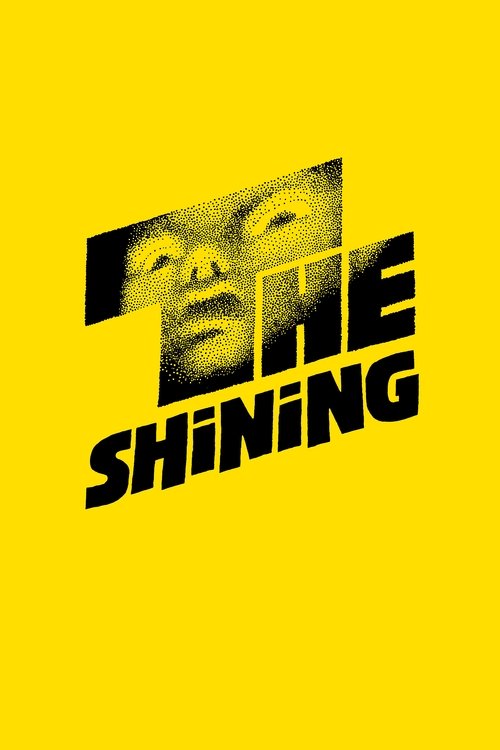
Spoiler Warning
This article contains major spoilers for The Shining (1980).
So what actually happens at the end?
The Shining ends in three movements. First, Jack — fully claimed by the Overlook after his confrontation with Grady's ghost in the red bathroom and his drink at the spectral ballroom — takes the fire axe and chases Wendy and Danny through the hotel. Hallorann, who has driven up from Florida through a blizzard in a snowcat after picking up Danny's distress call, makes it into the lobby and is killed almost immediately by an axe blow to the chest. Second, Danny, who has been writing REDRUM ('murder' reversed) in Wendy's lipstick on a bedroom door, escapes into the snow-covered hedge maze. Jack follows. Danny doubles back over his own footprints and hides behind a wall of snow-laden hedge while his father, increasingly disoriented, gets lost deeper inside the maze. Wendy and Danny escape in Hallorann's snowcat, leaving Jack alive but stranded. By morning Jack has frozen to death in the snow, frame still in mid-snarl, eyes locked open. The film then cuts forward and the camera glides slowly down a hallway in the Overlook lobby toward a wall of black-and-white photographs. It settles on one image at eye level: a July 4th Ball, dated 1921, in which Jack — in the centre of the frame, dressed in a 1920s tuxedo, hand raised in greeting, smiling — is one of the partygoers. Kubrick holds the shot long enough that the audience cannot mistake what is being claimed. The hotel has always had him, and the freezing in the maze was simply the moment it took delivery.
Plot recap leading into the ending
Haunted by a persistent writer's block, the aspiring author and recovering alcoholic, Jack Torrance, drags his wife, Wendy, and his gifted son, Danny, up snow-capped Colorado's secluded Overlook Hotel after taking up a job as an off-season caretaker. As the cavernous hotel shuts down for the season, the manager gives Jack a grand tour, and the facility's chef, the ageing Mr Hallorann, has a fascinating chat with Danny about a rare psychic gift called "The Shining", making sure to warn him about the hotel's abandoned rooms, and, in particular, the off-limits Room 237. However, instead of overcoming the dismal creative rut, little by little, Jack starts losing his mind, trapped in an unforgiving environment of seemingly endless snowstorms, and a gargantuan silent prison riddled with strange occurrences and eerie visions. Now, the incessant voices inside Jack's head demand sacrifice. Is Jack capable of murder?
Timeline of the reveal
REDRUM and the axe through the door
Danny, in a trance, walks through the apartment holding Wendy's lipstick and writes REDRUM on the bathroom door in mirror-script. Wendy, woken by Danny's voice repeating the word, sees it reversed in the mirror as MURDER. Outside the door, Jack begins his slow advance with the fire axe, narrating his arrival. He chops through the apartment door and delivers the 'Here's Johnny!' shot — improvised by Nicholson, edited by Kubrick to register as both threat and television-host parody simultaneously.
Hallorann's arrival and death
Dick Hallorann, who has spent the previous twenty minutes of screen time flying back to Denver and driving a snowcat up the closed road, finally enters the Overlook lobby calling Danny's name. Jack steps out from behind a pillar and kills him with a single axe blow to the chest. The death is shockingly fast — the film does not build the rescue Hallorann appears to be promising — and Danny, hearing Hallorann's shining go dark, flees through a window.
Danny enters the hedge maze
Danny runs out of the hotel into the snow and into the hedge maze, the same maze his mother showed him from the topiary model on day one. Jack follows, dragging his bad leg, axe in hand, breath visible. The film cuts between Wendy wandering the hotel — encountering a series of unrelated apparitions that the script does not bother to explain — and Danny picking through the icy corridors of the maze.
The doubled footprints
Danny realises he is leaving a trail Jack can follow. He stops, turns, and carefully walks backward in his own footprints, then steps off the path behind a snow-laden hedge wall and waits. Jack, increasingly cold, increasingly disoriented, follows the footprints to the point where they stop and cannot understand what he is looking at. He stumbles deeper into the maze, calling Danny's name in a voice that has lost most of its language.
Escape in the snowcat
Danny doubles back to the hotel entrance. Wendy is there. They climb into Hallorann's snowcat and drive away down the closed access road, the engine the only sound for nearly a full minute of screen time. The film does not show them reaching safety; it cuts away while they are still on the mountain.
Frozen Jack and the 1921 photograph
Morning. Jack is frozen in mid-stride in the maze, eyes open, mouth locked open. The camera then cuts inside the hotel and glides slowly down a hallway lined with framed black-and-white photographs. It selects one — July 4th Ball, 1921 — and pushes in until Jack's face is unmistakable at the centre of the gathering. The caption is held on screen. The Midnight, the Stars and You plays over the cut.
Character motivations
Jack arrives at the Overlook needing the job, needing the sobriety, and needing the unfinished novel to be finished. By the third act every one of those needs has been re-routed by the hotel into something the building can use. The drink Lloyd pours him in the Gold Room is the pivot — Jack has been five months sober, and the moment he accepts the bourbon he stops being a man trying to write and starts being the caretaker the photograph has been waiting for. The axe in the maze is the smallest decision he makes all night.
Wendy spends most of the film performing the version of herself her marriage has taught her to be — anxious, accommodating, willing to read her husband's silences charitably. The third act forces her into a different posture. She finds the typed manuscript that contains only the sentence 'All work and no play makes Jack a dull boy' repeated for hundreds of pages, and she stops being a wife and starts being a mother whose only job is to get her son out. The bat she swings on the staircase is her first real choice in the film.
Danny is the only character with a working channel to what the Overlook actually is, and most of his third-act motivation is technical: he has to keep his shining quiet enough that Jack cannot find him by it, while keeping it loud enough that Hallorann can. The REDRUM sequence is him handing his mother the information in a form she can read without him having to be the one to deliver it. The doubled footprints in the maze are the same instinct — a five-year-old solving a problem the way the hotel does not expect him to.
Hallorann is the only adult in the film who recognises what is happening at the Overlook and is willing to drive into a blizzard to do something about it. His motivation is the channel he opened with Danny in the pantry — a promise, however informal, that another shining person was within reach. Kubrick punishes the motivation by killing him three steps into the lobby. The cruelty of the choice is structural: the film refuses the rescuing-cavalry shape of the source novel and lets the hotel have its win.
The hotel itself is the film's third major character, and its motivation is the simplest in the script. It wants the caretaker. It has had caretakers before — Grady is the most recent one named, but the photograph at the end implies a much longer chain. The hotel offers Jack the things his life has not given him: an audience, a drink, the pretence of authority, a story in which he is finally important. Every supernatural manifestation in the third act is part of that offer. The frozen body in the maze is the receipt.
The final scene
The closing scene of The Shining is one of the most surgically constructed image sequences in Kubrick's filmography, and it operates by withholding almost everything. The morning after the maze chase, the camera finds Jack frozen in a half-crouch in the icy corridor, his exposed face caked with frost, his eyes still open and locked on a point about three feet ahead of him. Kubrick holds the shot in absolute silence except for the wind. The composition reads as a body that died mid-sentence — mid-snarl, mid-pursuit — and the film makes no attempt to dignify it. There is no music. There is no human face to react to it. The shot ends when Kubrick wants it to end, not when the emotional beat would conventionally close. The film then cuts inside the Overlook. The camera is in the lobby, near the floor, moving slowly down a long hallway lined on both sides by framed black-and-white photographs of past gatherings at the hotel. The Midnight, the Stars and You — a 1932 Ray Noble recording, sung by Al Bowlly — fades up on the soundtrack. The song is doing two distinct kinds of work. It is anachronistic by half a century relative to the morning we have just left, which puts the audience into a different temporal register before the image makes its claim. And its lyric is a goodnight song from a lover to a sleeping partner, which is the wrong register entirely for a film about a man who took an axe to his family. The camera drifts past several photographs, none of which register as anything more than period decoration on first viewing. Then it slows. Then it isolates one image at roughly eye level — a wide group portrait of a crowded ballroom, men in tuxedos and women in beaded dresses, the centre of the frame occupied by a man holding up a hand in the gesture of a host welcoming a guest. The camera pushes in toward that man until his face fills the frame and the audience cannot any longer mistake who it is. Jack. The caption below the photograph is shown unambiguously: Overlook Hotel, July 4th Ball, 1921. The song continues. Kubrick holds the photograph for an unusually long beat — long enough for the audience to test the image, to look for some other explanation, to wonder whether it is a reflection or a costume or a hallucination, and to find that none of those readings work. The composition is too clean. The face is too centred. The hand is too deliberate. The film offers no narration to resolve the image, no dialogue card, no return to the present. It simply lets the photograph be what it is, and lets the song finish underneath it, and cuts to a black title card. The whole closing sequence is roughly ninety seconds. It rewrites every preceding scene.
Symbolism
Drawing on Wikipedia entry on The Shining (1980 film), Britannica entry on the 1980 Kubrick film, and Wikipedia entry on the Overlook Hotel.
The symbolism of The Shining (1980) is engineered to operate on a slower release schedule than most studio horror would tolerate. Kubrick plants images in the first hour that do not earn their reading until the final shot, and several of them — the maze, the number 237, the corridor of blood, the word REDRUM, the 1921 photograph — are designed to be re-read at different scales across multiple viewings. Three symbolic systems do most of the load: the hotel as a memory of American violence, the maze and the room as concentric architectures of entrapment, and the photograph as supernatural evidence rather than supernatural metaphor.
The Overlook as American historical memory
Kubrick spends an unusual amount of his hotel-tour dialogue establishing the Overlook's literal history — built on a Native American burial ground, the property absorbed several attacks during its construction, the dining room hosted Presidents, the kitchen ran for socialites, the wallpaper went out of style and was replaced.1 The film is one of the few studio horror productions of its era to place its haunted house on top of an explicit colonial fact, and to keep returning to that fact in the visual language of the building. The corridor patterns are Navajo-derived. The bar staff who appear to Jack in the Gold Room are dressed for a 1920s party that the building seems to have catered repeatedly. The wave of blood that floods out of the elevator — the same image Tony has been showing Danny since before the family arrived — is too large to read as a single death. It is the building's accumulated record, and the film stages it as something the architecture cannot fully store.5 The Overlook in Kubrick's reading is not a haunted house in the gothic sense — it is a national memory device that the camera treats as honestly as it would treat a battlefield. Jack's role in the final photograph is therefore the inheritance the building has been arranging since the opening tour. He has always been the caretaker because the building has always had one of him.2
The maze, Room 237, REDRUM
The film is built around three concentric architectures of entrapment.1 The outermost is the hedge maze, which is large enough to lose a child in and small enough for Wendy to study as a tabletop topiary model from the lobby. The middle is the hotel itself, with its corridors that do not connect the way the floor plan suggests they should and its rooms that contain different sizes of space depending on which scene the camera is in. The innermost is Room 237 — a single room inside the building inside the maze, the small space that Danny is warned away from and that Jack eventually walks into. Kubrick's symbolic argument is that the three architectures are nested but not separable: you cannot leave the maze without leaving the hotel without leaving the room, and the film's third act is the demonstration of that nesting collapsing inward. Danny's escape works because he reverses the logic of the maze — doubling back in his own footprints — but Jack cannot reverse the logic of the hotel or the room, because by the time he is in the maze the hotel has already photographed him. REDRUM is the symbolic key the film hands the audience for reading the entire structure. The word is murder spelled backward, and the building runs backward at every scale: the corridor twins are dead and alive, the ballroom is empty and full, Jack is alive in 1980 and a photographed guest in 1921. The film argues that the way out of this geometry is to read it in reverse — which Danny can do, and Jack cannot.
The photograph as supernatural evidence
The 1921 photograph at the end is the only piece of supernatural information in the film that is delivered as physical evidence rather than as subjective experience. Every other apparition — Lloyd at the bar, Grady in the red bathroom, the woman in 237, the twins, the elevator of blood — is staged through Jack's or Danny's point of view, which leaves the film's standard horror question (is this real or is the character coming apart) productively unresolved. The photograph is different. It is shown to the audience directly, with no character in the frame to anchor it as subjective. The caption is readable. The face is centred. The hand is raised. The image refuses every available not-supernatural reading the film has previously allowed for. Symbolically, this is the film's only unambiguous statement, and Kubrick saves it for the final ninety seconds. The argument is that the entire preceding film has been the surface of an event whose deeper layer is the one the photograph is showing — and that the audience has been watching the hotel collect a caretaker it had already photographed sixty years earlier. The photograph functions as the symbolic equivalent of a confession entered into evidence at the end of a trial. It does not interpret. It documents.
Themes
Drawing on Wikipedia entry on The Shining (1980 film), Britannica entry on Stephen King's source novel, and Wikipedia entry on the Overlook Hotel.
The themes of The Shining (1980) work at three scales simultaneously, and Kubrick organises the film so that the scales do not interfere with each other. The largest is national: American violence as a haunting that buildings remember. The middle is institutional: the family as a closed system in which abuse is recursively transmitted. The smallest is personal: the writer's life as a slow trade between sobriety and audience.
American violence as architectural memory
Kubrick's most-discussed thematic move is to place the Overlook on top of an explicit colonial fact and then to refuse to use that fact as a single-scene reveal.1 The information is delivered in the opening tour as architectural trivia and the film never returns to lecture the audience about it. Instead, the film embeds the violence in the building's surfaces — Navajo-derived corridor carpet patterns, ballroom photographs the camera lingers on, a wave of blood whose volume is too large to be one death.5 The thematic argument is that the United States in 1980 is a country with a great deal of unprocessed violence stored in its physical infrastructure, and that the Overlook is the version of that storage problem the film has chosen to dramatize. The hotel does not produce ghosts; it stores them, and the storage capacity is centuries deep. The film treats Jack as a man arriving at a national archive he did not know he was about to be filed into. The recursive image — Jack at the centre of a 1921 photograph — is the film saying, in its only unmediated supernatural moment, that the storage system has access to time the building's guests do not. The argument is not that America is haunted. It is that the buildings America puts on top of its violence learn to use the violence.
The family as a closed system
The middle scale of theme is the family. Kubrick spends much of the first hour establishing that the Torrances are already in trouble before the Overlook gets to them. Jack has previously broken Danny's arm in a drunken outburst. Wendy has stayed. Danny has produced a coping mechanism — Tony, the imaginary friend who lives in his mouth — that the school psychologist has flagged as a dissociative response to trauma.4 The hotel does not introduce abuse into the family; it amplifies the abuse that is already there. The film's thematic argument is that families with histories of violence operate as closed systems with their own internal weather, and that the Overlook is a tuning fork for that weather. Wendy's lines about her husband's earlier drinking are shot in registers that suggest she has rehearsed them — the conversation with the doctor in the kitchen, in particular, is staged like a woman managing a script she has used before. By the third act the film has made the abuse-recursion explicit: Grady's ghost in the red bathroom tells Jack that his own twin daughters 'didn't care for the Overlook' and that he had to 'correct them,' and that Jack will now have to do the same. The hotel is not corrupting Jack from outside. It is asking him to repeat a pattern the family already contains.
The writer's life as a trade between sobriety and audience
The smallest and quietest scale of theme is the one that critics often subordinate to the supernatural reading, but it is the scale at which Jack actually lives. Jack is a former teacher who has been working on a book that has not progressed, who has been five months sober at the start of the film, and who has accepted an off-season caretaker job specifically to give the writing room to finish. The Overlook offers him something he has not been able to give himself: an audience. Lloyd at the bar is the first piece of the offer — a bartender who listens, who pours, who absorbs the writer's monologues about his wife and his career. Grady in the red bathroom is the second — a man dressed as authority who tells Jack that he is, in fact, the man in charge of this building, the caretaker on whom the institution depends. The Gold Room ballroom scene is the third — an entire crowd of well-dressed strangers who pay attention to Jack as he walks among them. The thematic argument is that the trade Jack makes is the writer's worst trade. He gives up the sobriety, which produced no audience, for the drink, which produces all the audience he has wanted. The book never gets finished; it never even gets started; what Wendy finds at the typewriter is one sentence repeated for hundreds of pages. The film is honest enough not to let Jack write a real novel in his haunted-house breakdown. It treats writing as the labour the hotel has come to release him from. The 1921 photograph at the end is, among other things, the audience the writer's life never gave him. The hotel has framed him in the centre of a room full of attention. The price is that he is dead and the attention is being paid to a photograph.
Final shot interpretation
Drawing on Wikipedia entry on The Shining (1980 film), Britannica biographical entry on Stanley Kubrick, and Britannica entry on Stephen King's source novel.
The final shot of The Shining (1980) is a still photograph. It is held on screen, in tight push-in, for roughly twenty seconds — an eternity at the close of a film — and is accompanied by a 1932 recording of Al Bowlly singing The Midnight, the Stars and You.1 The image is captioned Overlook Hotel, July 4th Ball, 1921. The man at the centre of the photograph, hand raised in the gesture of a host welcoming a room, is Jack Torrance, the same Jack the audience has just watched freeze to death in the maze in what reads as the same morning the camera left a few minutes ago. There is no narration over the shot. There is no explanatory cut. The film ends on the photograph. To read what the photograph does, it helps to read what it refuses to do.
Refusing the reveal-as-explanation
Most studio horror films closing on a supernatural reveal frame the reveal as the answer to a question the previous two hours have been asking. The Shining does not do this. The photograph does not answer the question of whether the Overlook is haunted; the audience already knows it is. It does not answer the question of whether Jack was possessed or insane; the photograph supports possession but does not foreclose insanity, and the film has been comfortable with both readings since the Gold Room. What the photograph does is open a new question — when did the hotel acquire Jack, and how far back does the chain of caretakers go — that the film closes on rather than answers. Kubrick's refusal of the reveal-as-explanation is the structural argument of the closing shot. The film is telling the audience that the question of when this began is older than the question of why it happened.
The Midnight, the Stars and You
The song under the closing shot is doing more than period atmosphere. The Midnight, the Stars and You is a love song addressed to a sleeping partner — the chorus is a goodnight murmured by a lover unwilling to wake the other person. The lyric and the image are operating in different emotional registers, and Kubrick is deliberate about the mismatch.3 The photograph is the Overlook's claim on a caretaker. The song is the Overlook's seduction of one. The combination tells the audience how the building experiences the killing of the Torrances: not as a violence but as an arrangement, not as a possession but as a homecoming. The song is also anachronistic — recorded in 1932, eleven years after the photograph's dated event — which is a small additional cue that the building's relationship to its own timeline is not the one the calendar would predict.
The push-in
Kubrick's camera movement across the closing thirty seconds is unusual in his late filmography for its slowness and its directness. The camera enters the hallway at floor level, glides past several other photographs without lingering, and then selects the 1921 image and approaches it on a perfectly straight axis. The push-in is the same camera movement Kubrick has used twice earlier in the film — once on the model of the maze in the lobby, once on Danny in his trance — and the rhyme is deliberate. The film argues, in the geometry of its own camera moves, that the photograph and the maze and Danny's trance are the same kind of object: a surface that contains a deeper layer, and that the camera, by pushing in, is trying to enter. The maze contained Jack. The trance contained Tony. The photograph contains the entire preceding film. Kubrick's closing argument is that the photograph is not the ending but the underlying layer the film has been moving toward since the opening helicopter shot.
Why the film refuses to cut to the family
The most disciplined choice in the closing sequence is the one Kubrick does not film. Wendy and Danny are last seen in Hallorann's snowcat, alive, driving down a mountain road in the dark. The film does not show them reaching safety.4 It does not give the audience a reaction shot of Wendy hearing that her husband has been found dead. It does not show Danny processing his father's absence. The thematic argument for the omission is consistent with the rest of the closing sequence: the film does not belong to the family at the end. It belongs to the building. The Overlook has its caretaker back, the photograph confirms the caretaker has always been there, the song is the lullaby the building is singing over its claim, and the snowcat carrying Wendy and Danny is, from the building's point of view, an irrelevant detail. The film closes on the side of the architecture rather than the survivors — which is what makes the ending more unsettling than the source novel, where the hotel explodes in a boiler-room fire and the family is collected by a sympathetic adult. Kubrick refuses both the destruction and the rescue. The building is still standing. The photograph is still on the wall. The song is still playing. The audience is the only thing that gets to leave.
Back to the full movie guide
Plot, cast, where to watch, and similar films — without spoilers.
Open guide →Frequently Asked
What does the 1921 photograph at the end actually mean?
The photograph is the film's confirmation that the Overlook's claim on Jack is not the result of a winter spent alone with bad chemistry but a much older arrangement. Kubrick offers no narrating voice to fix the reading, but the visual evidence is specific: Jack's face is at the centre of a wide group portrait dated July 4th, 1921, and his hand is raised in the practised gesture of a host. Several readings have circulated since release, and the film comfortably supports more than one. One reading is reincarnation — the hotel has had Jack before, perhaps as a 1921 partygoer or staff member, and the winter caretaker job is a periodic harvest. Another reading is absorption — the Overlook claims its caretakers backward in time as well as forward, so the photograph is being produced in the act of his dying. Both readings agree on the load-bearing point: 'You've always been the caretaker' is not a metaphor.
Why does Hallorann drive all that way only to die immediately?
Kubrick's deviation from Stephen King's novel is most visible here. In the book, Hallorann survives the rescue and helps Wendy and Danny escape. In the film, Hallorann is killed by Jack within seconds of stepping into the Overlook lobby. The structural reason for the change is that Kubrick's hotel is more powerful than King's hotel, and the film cannot afford a rescue arc that promises a managed outcome. Hallorann's death is the film telling the audience that the supernatural shape of this story is not the one where the cavalry arrives. The practical consequence is that the family's escape becomes Danny's own work — the doubled footprints in the maze are his solution, not an adult's. Hallorann's role in the film is therefore narrative permission rather than narrative rescue: he validates the shining, gives Danny the language for it, and provides the snowcat. The hotel takes the rest.
What is in Room 237?
Kubrick refuses to give Room 237 a fixed answer, which is part of why it remains the film's most-debated set piece. What the audience sees is consistent: a beautiful young naked woman steps out of the bathtub and embraces Jack, and as he kisses her he sees in the mirror that she is the laughing decomposing corpse of an elderly woman. Several interpretive frames have settled around the scene. The first reads Room 237 as the hotel's seduction protocol — it offers Jack a fantasy his marriage has not supplied, then reveals what the fantasy actually is. The second reads it as a coded representation of trauma, abuse, or repression — Danny's earlier injury in the room is staged as the kind of event the family is no longer talking about. The third reads it through Kubrick's larger interest in numbered rooms as gates. The film does not resolve between them. It does insist that whatever is in 237 is the device that turns Jack from a man performing a marriage into a man writing the same sentence for seventy pages.
Why REDRUM and not just MURDER?
Danny writes REDRUM in lipstick on the bathroom door because he is in a trance state and the message is coming through Tony, the version of himself that lives in his mouth and shows him things. The choice of mirror-script is the script's way of making the audience read the warning the same way Wendy does — by looking up at the bathroom mirror and seeing the reversed letters resolve into MURDER. The reversal is the film's most efficient piece of telegraphing. It is also a structural rhyme. The Overlook works in mirrors throughout the film — the corridor twins are doubled, the ballroom scene is reflected in glass, the maze's topiary model is a literal mirror of the maze itself, and the 1921 photograph is a reflection of a Jack that should not exist. REDRUM is Danny showing the audience the rule: in this building, the message is the message backwards.
Is Jack possessed, mentally ill, or both?
The film refuses to choose, and the refusal is not laziness — it is the design. Jack arrives at the Overlook with documented previous violence (he broke Danny's arm in a drunken outburst before the move) and a fragile sobriety. Wendy treats his early changes as a relapse. The film treats them, simultaneously, as the early stages of the hotel taking possession. Both readings hold across almost every scene. The bourbon in the Gold Room is real to Jack and is also poured by a ghost. The conversation in the red bathroom is a hallucination and is also Charles Grady. The 1921 photograph at the end is the moment the film tips its hand — but it does not tip it all the way, because if the photograph proves anything it proves that the hotel and Jack have always been collaborators rather than victim and perpetrator. The film argues that the question 'possessed or insane' is the wrong question for what the Overlook does.