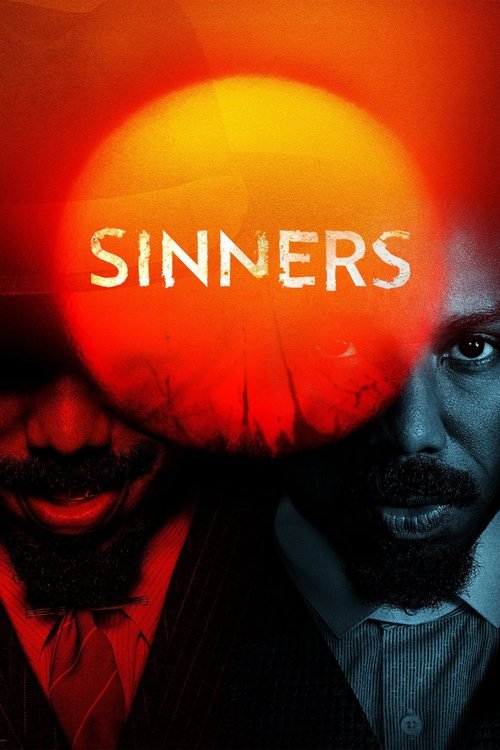
Spoiler Warning
This article contains major spoilers for Sinners (2025).
So what actually happens at the end?
Sinners (2025) ends three times: at the dawn that burns the vampires after the juke-joint siege, at the 1992 mid-credits scene where elderly Sammie — played by the real blues guitarist Buddy Guy — refuses Stack's offer of immortality, and at the post-credits coda of young Sammie singing 'This Little Light of Mine' in his father's church. Ryan Coogler builds the closing minutes around Sammie's survival and Smoke's afterlife vision of Annie.
Plot recap leading into the ending
Sinners is a 2025 American horror film produced, written, and directed by Ryan Coogler. Set in 1932 in the Mississippi Delta, it stars Michael B. Jordan in dual roles as criminal twin brothers who return to their hometown in the Jim Crow South, where they are confronted by a supernatural evil. The film co-stars Hailee Steinfeld, Miles Caton, Jack O'Connell, Wunmi Mosaku, Jayme Lawson, Omar Benson Miller, and Delroy Lindo.
Symbolism
Drawing on Melanie McFarland's Salon essay, Joel Brown's BU Today conversation with Regina Hansen and Victor Coelho, Owen Gleiberman's Variety review, and Tim Molloy's MovieMaker crossroads essay.
The symbolism of Sinners (2025) is built from three stacked systems centred on the bluesman Sammie: the guitar as a veil-piercing ancestral conduit, the Robert Johnson crossroads as the genre's Faustian shadow, and the juke joint and the church as the twin rooms of one Black-Southern sacred geography. Sinners works as a film by stacking three symbol systems on top of one another and letting them feed each other through the body of one character: the bluesman Sammie, played in 1932 by Miles Caton and in 1992 by the real Chicago blues guitarist Buddy Guy. Each symbol does at least two jobs at once.
The guitar and the veil
The film opens on Annie's voiceover making a specific spiritual claim — that there are "special people 'born the gift of making music so true that it can pierce the veil between life and death,'" as Melanie McFarland transcribes the line in her Salon essay on the film.2 That claim is then literalised inside the juke joint when Sammie plays and the barn fills with dancers from every era of Black-diasporic music — pre-Christian griots, Reconstruction bluesmen, mid-century rhythm sections, hip-hop performers — in a single sequence McFarland reads as Sammie "play[ing] powerfully enough to touch that bridge between past, present and future that Annie spoke of."2 Regina Hansen, in Boston University's faculty conversation on the film, calls the sequence both "wonderful" and possibly premonitory — "it's actually a barn burner, right?"3 The guitar is the conduit. By the time Remmick's vampires breach the door, the audience already knows the guitar is not just an instrument; it is the ancestral channel the vampires want to drink from.
The crossroads
Coogler's framing of the music as something dangerous to play is held together by an off-screen but inescapable reference: the Robert Johnson crossroads myth, in which a Delta bluesman is said to have traded his soul to the devil for talent. Tim Molloy, writing for MovieMaker, points out that the character names Smoke and Stack already reference Howlin' Wolf, but that "the deepest debt may be to Robert Johnson's 'Crossroad,'" and that Sinners "leaves wide open the possibility that Sammie's decision is what invites in the hell that follows. Without giving too much away, one could come away from the film concluding that Sammie has made his own deal at the crossroad."5 The crossroads is the unspoken second symbol in Sammie's hands — the same gift Annie's voiceover names as sacred is, simultaneously, the gift the genre's Faustian tradition names as cursed.
The juke joint and the church
The third symbol cluster is spatial. Owen Gleiberman's Variety review identifies the arc Sammie's character is built to walk: "Preacher Boy, playing the guitar he was given by the twins... is the son of the local preacher. He's breaking away from the church to play the devil's music."4 The juke joint Smoke and Stack open is the film's secular church — communal, dancing, sexual, alive — and the white-vampire siege is staged as an attack on that alternate sanctuary specifically. The closing post-credits sequence sends Sammie back to his father's church to sing "This Little Light of Mine," collapsing the symbol system: the juke joint and the church are not enemies but rooms in the same Black-Southern sacred geography, both threatened from outside, and the boy with the guitar is the one figure the film lets travel between them.
Themes
Drawing on Ryan Coogler's Democracy Now interview with Amy Goodman, Melanie McFarland's Salon essay, Joel Brown's BU Today conversation with Regina Hansen and Victor Coelho, and Owen Gleiberman's Variety review.
The themes of Sinners (2025) are three: the wages of sin in Black America as paid by Black bodies for white sins, the deliberate 1932 Clarksdale Mississippi-apartheid setting as the film's thesis rather than its backdrop, and vampires as cultural extraction set against the KKK as cultural extermination. Three themes braid the film together: the "wages of sin in Black America" framing Owen Gleiberman identifies in Variety, the specific 1932 Mississippi-apartheid setting Coogler picked to host them, and the vampires-as-extraction logic that lets Coogler stage the racial argument inside a horror film without softening either.
The wages of sin in Black America
Gleiberman's Variety review names the film's project plainly: Sinners is "a rare mainstream horror film that's about something weighty and soulful: the wages of sin in Black America."4 He is careful to specify which sin — not Sammie's, but the racist white culture's. The vampires, in Gleiberman's reading, "are presented as extensions of the racist white culture that wants to stop the party," and the trade they offer is structural: "The vampires promise eternal life, but they're like zombies who have come to leech away your freedom."4 The film's central moral argument is therefore directional: the wages are paid by Black characters for white sins, and the only economy that lets them keep something for themselves is the one happening inside the juke joint while the night is young.
1932 Clarksdale as the deliberate setting
Coogler has been explicit about why the film is anchored to Mississippi rather than to a more generic Southern Gothic. Speaking on Democracy Now, he framed the Delta as a place where, despite sharecropping conditions, "this music made by people who were... living under a back-breaking form of American apartheid... would create something so artistically excellent" became the foundation American popular music eventually built on.1 The setting choice is not background; it is the thesis. Gleiberman's review reads Clarksdale in 1932 as "a place of sharecroppers and blues singers and racist rednecks and sexy pent-up passion,"4 a description the film honours by refusing to flatten any one of those registers — the juke joint can carry sex, music, and political clarity at the same time because the place did.
Vampires as extraction; KKK as extermination
The film's most-discussed thematic move is the way it reads vampirism as a kind of cultural appropriation rather than as a simple monster. Victor Coelho, the Boston University musicologist Joel Brown interviewed alongside CGS lecturer Regina Hansen, draws the line bluntly: "The KKK are worse than the vampires, right? I think he pretty clearly states that if you're going to pick one, you're going to pick the vampire."3 The distinction is precise. The Klan in 1932 Mississippi exists to kill Black people; the vampire exists to copy them — to take their music, their bodies, their lineage, and keep functioning. Salon's Melanie McFarland reads the vampire bite the same way: the vampires "absorb their memories and abilities," not just blood — they consume the soul, the technique, and the ancestral line in one motion.2 Read against Coogler's stated formal ambition — "I wanted to make a film that was kind of raging against the concept of genre and making the audience constantly question it"1 — the vampire is the perfect device, because the horror form, like the white culture the film argues with, is itself an extraction machine the film is forcing to host its real subject.
Final shot interpretation
Drawing on Ryan Coogler's Democracy Now interview with Amy Goodman, Melanie McFarland's Salon essay, Owen Gleiberman's Variety review, and Tim Molloy's MovieMaker crossroads essay.
The final shot of Sinners (2025) is a three-stage closing: the dawn that burns the vampires after the juke-joint siege, the 1992 mid-credits scene in which elderly Sammie (played by the real Chicago bluesman Buddy Guy) refuses Stack's offer of immortality, and the post-credits coda of young Sammie singing "This Little Light of Mine" in his father's church. Sinners ends three times — at the sunrise that ends the night, at the 1992 mid-credits scene that ends Sammie's century, and at the post-credits church coda that ends the film's argument with itself. Each ending closes a different system the film has been running in parallel.
The sunrise and Smoke's vision
The juke-joint siege resolves in the most literal genre way available to a vampire film: the sun comes up and burns the monsters. Coogler has been explicit on Democracy Now that he built the project to push against the audience's reflex genre expectations rather than satisfy them1 — so the first close-of-the-night is the point where the film deliberately gives the audience something the form demands (the dawn weapon) and then immediately follows it with something the form does not have a slot for. Smoke, dying from a gunshot wound after killing Remmick, gets a vision of Annie and their lost baby daughter waiting for him; the film resolves his arc inside an interior, sacred image rather than a third-act survival beat. The wages Owen Gleiberman names in his Variety read4 are paid here, on Smoke's body specifically.
The 1992 mid-credits scene
The film's actual closing argument is staged sixty years later. Elderly Sammie — now played by the real Chicago blues musician Buddy Guy — is performing in a small club when Stack and Mary, still preserved in vampire 1932 youth, walk in. Stack honours the promise Smoke extracted from him at gunpoint and lets Sammie live. He then offers Sammie the deal the genre says he should take: immortality, in exchange for crossing over. Sammie refuses, and tells Stack that before the sun went down, the night at the juke joint was the best day of his life. Read against the film's Robert-Johnson scaffolding, this is the second crossroads. Tim Molloy's MovieMaker piece names the first one — the suggestion that "Sammie's decision is what invites in the hell that follows" — and floats the read that "one could come away from the film concluding that Sammie has made his own deal at the crossroad."5 The 1992 sequence inverts that read. The deal Sammie makes, in the version of his life the film lets him keep, is to refuse the deal — to take mortality, the trauma, and the memory rather than the vampire's immortality.
The "This Little Light of Mine" coda
The film's last image, after the longer mid-credits scene, is a brief shot of young Sammie singing "This Little Light of Mine" in his father's church. Gleiberman flagged the post-credits sequence as the place where Coogler "completes his film's fanciful cosmology,"4 and this short church coda is the cap. The juke joint and the church, set up as opposites for most of the film, finally meet — both are rooms where Black voices are allowed to be sacred, and the same boy walks in and out of both. The film's argument, by the time the screen goes dark, is not that Sammie chose the church over the juke joint or the human over the vampire. It is that he chose to keep his particular Black-American light — ancestral, mortal, music-shaped — rather than trade it in for a borrowed white-genre eternity. The veil Annie's voiceover named in the opening minute2 is the same veil Sammie is still close to in 1992, and the same one he will pass through the human way, in time.
Back to the full movie guide
Plot, cast, where to watch, and similar films — without spoilers.
Open guide →Frequently Asked
What is Sinners about?
Trying to leave their troubled lives behind, twin brothers return to their hometown to start again, only to discover that an even greater evil is waiting to welcome them back.
Where can I watch Sinners?
See the Where to Watch section below for the current streaming, rental, and purchase options in your region.