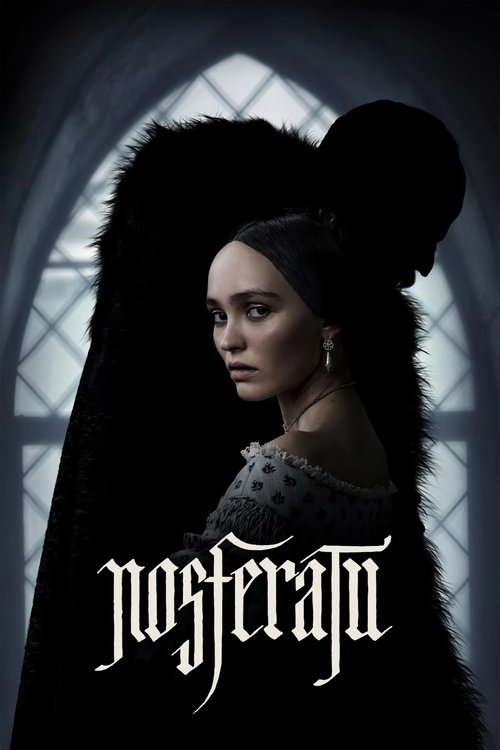
Spoiler Warning
This article contains major spoilers for Nosferatu (2024).
So what actually happens at the end?
Nosferatu (2024) ends with Ellen Hutter and Count Orlok entwined in her bed in 1838 Wisborg, blood soaking the sheet, as dawn fills the chamber — a composition Robert Eggers designed as a German-Renaissance 'Death and the Maiden' tableau in the lineage of Hans Baldung. The lovers do not separate at sunrise; Ellen's sacrificial choice destroys the vampire and ends the plague reaching the town through Orlok.
Plot recap leading into the ending
Nosferatu is a 2024 American Gothic horror film written and directed by Robert Eggers. It is a remake of Nosferatu: A Symphony of Horror (1922), which was in turn inspired by Bram Stoker's novel Dracula (1897). It stars Bill Skarsgård, Nicholas Hoult, Lily-Rose Depp, Aaron Taylor-Johnson, Emma Corrin, and Willem Dafoe.
Symbolism
Drawing on Robert Eggers and Lily-Rose Depp's SyFy Wire conversation with Tara Bennett, Bhruvi Bhatia's Musée Magazine review, and Taline Hagopian's Berkeley Fiction Review essay.
The symbolism of Nosferatu (2024) is built from three systems: the Hans Baldung "Death and the Maiden" German-Renaissance composition the closing tableau is staged after, the shadow that doubles as Count Orlok and as Ellen's repressed sexual self, and the bedchamber as a feminised treatment room where men attempt to manage Ellen's body. Nosferatu (2024) is the most painterly horror film Robert Eggers has made — every important moment is staged to an image he has already drawn or sourced — and three symbol systems pull most of the weight: the Hans Baldung "Death and the Maiden" composition the film is built around, the shadow Orlok casts (and is), and the bedchamber as a place of feminized medical violence rather than refuge.
The Hans Baldung "Death and the Maiden" composition
Eggers has been explicit, in his SyFy Wire conversation with Tara Bennett, that the closing tableau is a deliberate German-Renaissance reference: "There is not a specific 'Death and the Maiden' painting, or engraving that this it's based on, but it's a motif that's been done so well, so many times in our history that it was fun to try our hand at it."1 The motif's earliest German source is the Strasbourg printmaker Hans Baldung — whose woodcuts pair a young woman with a skeletal figure pressing against her flesh — and Eggers's own description of the contrast he was after is recognisably Baldung's: "Lily-Rose Depp has this doll-like face, and Bill's makeup is so severe, it really is such a nice contrast."1 The Hans Baldung composition is therefore not decoration; the entire film is engineered to deliver the audience to that single tableau, then withhold it until the closing minutes.
The shadow
Inside that tableau Orlok performs a second symbolic job. The film never asks whether the vampire is real or metaphorical because it gives the audience both registers at once. Bhruvi Bhatia, writing for Musée Magazine, identifies the shadow as Ellen's own: "The shadow, by extension Nosferatu, might be her sexually repressed self acquiring form."3 Bhatia pushes the point further: "It is not separate from her; it is the specter of what she has been forced to bury now unfolding."3 Taline Hagopian, in an academic Berkeley Fiction Review essay, runs the same reading through Eggers's own dialogue — "Orlok explicitly tells Ellen that he is 'an appetite, nothing more'"4 — and frames the vampire as the personified shape of what Victorian respectability has spent the film telling Ellen she is not allowed to want. Hagopian places the device in broader Gothic terms: "Our monsters are what make us. They erupt from the collective body, breaking the skin at precise historical moments."4 Orlok is the precise-historical-moment shape of Ellen's, and 1838 Wisborg's, repression.
The bedchamber as treatment room
The third symbol cluster is medical rather than supernatural. Across the film, Ellen's bedchamber is the room in which men try to manage her body: Dr. Sievers's bloodletting, the corset-tightening, the laudanum doses, the restraint scenes. Hagopian frames the bloodletting in particular as "the forced perversion of menstruation, enacted by men to subdue her sexuality"4 — a register in which Victorian medicine and Gothic horror share an operating logic. By the time Ellen invites Orlok into the same bedchamber for the closing tableau, the room has already been the stage for a long parade of men treating her body as something to fix; the final coupling is the only time in the film a body crosses her threshold on her own invitation. The bedchamber is the third symbol, and the only one Ellen is finally allowed to authorise herself.
Themes
Drawing on David Crow's Den of Geek essay on the ending shot, Bhruvi Bhatia's Musée Magazine review, Taline Hagopian's Berkeley Fiction Review essay, and Chauncey K. Robinson's People's World review.
The themes of Nosferatu (2024) are three: Victorian female repression as the horror's actual engine, Ellen's interior psyche as the film's real setting rather than 1838 Wisborg, and the Ellen-Thomas marriage as the un-shamed love the film treats as worth dying to protect. The themes of Nosferatu (2024) cluster around a single argument: the Gothic horror genre is uniquely suited to staging the violence of Victorian female repression, because the genre and the period share a vocabulary for what a woman is allowed to want.
Repression as the engine
Taline Hagopian's Berkeley Fiction Review essay reads the film as a treatise on the period's particular form of suppression. The two lines she returns to are Ellen's own statements to her husband: that she is "unclean" and that Orlok "is her shame."4 Hagopian's read is that Eggers stages the entire plot as the working-through of one Victorian wife's interior — "she reckons with her desire, her debilitating internal shame, and with the oppressive flaws of the society around her."4 Chauncey K. Robinson, writing in People's World, runs the political register of the same point: Ellen "is a woman who doesn't always reside in the light but has found solace in darkness," whose precognition is pathologised by the men around her as a feature of "female hysteria... an affliction women suffered due to having a uterus."5 Robinson notes one bitter procedural detail — "It is only through the advocacy of a man that Ellen seems to be listened to"5 — that captures what Eggers is staging: the horror is not that Ellen has a shadow, it is that no one will let her name what the shadow is.
Ellen's interior as the actual setting
A second theme follows: the film does not really happen in 1838 Wisborg; it happens inside Ellen. Bhruvi Bhatia in Musée Magazine names this directly: "The narrative, though, initially appears to oscillate between consciousness and subconsciousness, later, it seems to unfold within depths of Ellen's psyche."3 Bhatia pushes the point harder still: "While the plot begs people to question if she desired Nosferatu or she had to be with Nosferatu to destroy it, the unparalleled cinematography asks if she was Nosferatu all along."3 The thematic move is significant because it changes what the film is doing with horror. Nosferatu is not a film with a Gothic-monster antagonist; it is a film in which the Gothic-monster antagonist is a register of the protagonist's own interior, made visible because the surrounding society has refused her any other vocabulary for it.
Where the real romance lives
A third theme works as a corrective. Because Eggers's Nosferatu pushes Ellen toward Orlok in the closing minutes, viewers can leave the film thinking the central love story is between victim and monster. David Crow's Den of Geek essay is careful to insist on the opposite: "Whereas other Dracula movies seek to turn the vampire into a romantic figure, the romance of Eggers' Nosferatu comes from Ellen's genuine love of Thomas."2 The Thomas-Ellen love is the human counterweight that gives Ellen's sacrifice moral content rather than merely sexual content. The final coupling with Orlok is the act through which she protects her actual marriage; the genre's reflex to read it as the consummation of dark desire is, in Crow's reading, the version of the film Eggers specifically declined to make. The film's three themes therefore braid one argument: Ellen is repressed by her century, the film stages that repression inside her psyche rather than around her, and the only love the film treats as un-shamed is the marriage she dies to save.
Final shot interpretation
Drawing on Robert Eggers and Lily-Rose Depp's SyFy Wire conversation with Tara Bennett, David Crow's Den of Geek essay on the ending shot, and Taline Hagopian's Berkeley Fiction Review essay.
The final shot of Nosferatu (2024) is a Hans Baldung "Death and the Maiden" tableau: Ellen Hutter and Count Orlok lie entwined in her 1838 Wisborg bedchamber at dawn, blood soaking the sheet, the two bodies refusing to separate at sunrise — a sacrificial composition Ellen has authored herself in order to end the plague reaching the town through Orlok. The closing minutes of Nosferatu (2024) deliver an image Robert Eggers said he had been planning since the earliest stage of development. Ellen lies in her bed in Wisborg, Count Orlok's body tangled with hers, blood soaking the sheet, while the dawn slowly fills the chamber. The film's argument about Ellen — her sacrifice, her agency, her shame, her love — collapses into a single composed tableau, and the entire third act is engineered to deliver the audience to that frame.
Why the bodies stay joined
What separates Eggers's tableau from his Dracula-film predecessors is that the lovers do not separate at dawn. Earlier vampire films treat the rising sun as a separation device: the vampire withdraws or burns alone while the human survives. Eggers refuses the cut. Ellen has invited Orlok into her bed precisely to hold him there until the chamber fills with light, and the film keeps them in the same frame through the whole transition. David Crow's Den of Geek essay, written hours after the film opened, named the move's emotional logic plainly: "It is a haunting final image for a film, and one that invites a richer reading about what Eggers' interpretation brings to Dracula's table."2 The image is not a death of Ellen by Orlok; it is a death they perform together because she has finally been allowed to choose the conditions of it.
Ellen as priestess
Crow's reading goes further. He points to Eggers's framing of Professor Albin Eberhart von Franz — Willem Dafoe's character, named for the Jungian analyst Marie-Louise von Franz — as the interpretive voice the film actually trusts, and reads Ellen's death as a ritual rather than a tragedy: she "still dies, but she does so like the Priestesses of Isis of old, secure in the knowledge that she has protected her world."2 The frame is significant because earlier Dracula adaptations reserve the priestly register for the men hunting the vampire — the Van Helsing position. Eggers gives that register to Ellen, in her own bedchamber, in a single composition. The Hans Baldung "Death and the Maiden" tradition Eggers has named as the visual source is therefore being used in a register Baldung himself never quite reached: the maiden is not passively claimed, she has authored the death.
Power inside the tragedy
When Tara Bennett asked Lily-Rose Depp at SyFy Wire whether Ellen's fate is tragic or empowering, Depp gave a one-word answer — "Both" — and then expanded: "There's so much power in the choice that she makes, and yet it's a heartbreaking end."1 Depp's framing is the right one because the film is built to refuse the audience the cleaner reading. Ellen is not rescued; Ellen is not destroyed; Ellen authors. The final shot reads at full strength precisely because it refuses to disentangle the eroticism from the ruin or the sacrifice from the desire — the same character carries both registers in the same frame. Taline Hagopian's Berkeley Fiction Review reading captures the political result of that combined image: through her sacrificial agency, "Ellen saves Wisborg from itself."4 The plague that has been reaching Wisborg through Orlok ends because Ellen, alone in a film full of men trying to manage her body, has finally been allowed to set the terms of one encounter.
The final shot's structural job, then, is to give Ellen the closing image her century, her marriage, her doctors, and her social caste all spent the film denying her: a moment of her own composition, lit in dawn, ended on her own count.
Back to the full movie guide
Plot, cast, where to watch, and similar films — without spoilers.
Open guide →Frequently Asked
What is Nosferatu about?
A gothic tale of obsession between a haunted young woman and the terrifying vampire infatuated with her, causing untold horror in its wake.
Where can I watch Nosferatu?
See the Where to Watch section below for the current streaming, rental, and purchase options in your region.