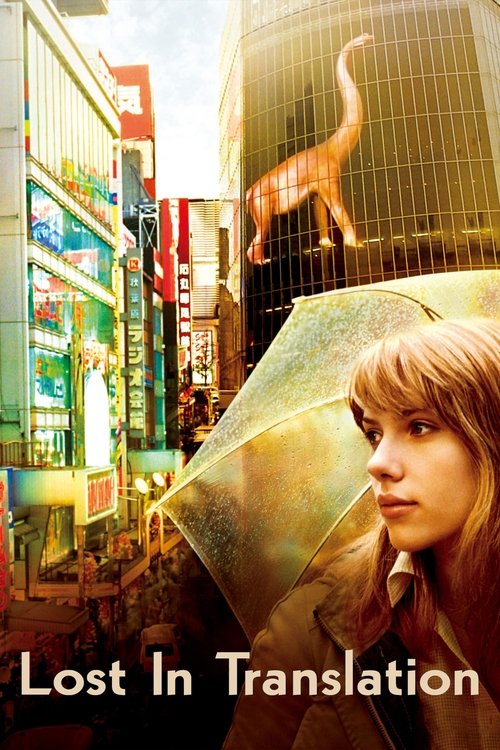
Spoiler Warning
This article contains major spoilers for Lost in Translation (2003).
So what actually happens at the end?
Lost in Translation (2003) ends with Bob spotting Charlotte in a Shibuya crowd from the back of his airport car, climbing out, holding her on the pavement, and whispering an inaudible sentence into her ear before driving away as Kevin Shields's score fades up. Sofia Coppola has said the line was improvised by Bill Murray and that she chose to keep it inaudible because what he says belongs between the two characters, not the audience.
Plot recap leading into the ending
Lost in Translation is a 2003 romantic comedy drama film written and directed by Sofia Coppola. Bill Murray stars as Bob Harris, a fading American movie star who is having a midlife crisis when he travels to Tokyo to promote Suntory whisky. He befriends another disillusioned American, Charlotte, a recent college graduate and married for two years. Giovanni Ribisi, Anna Faris, and Fumihiro Hayashi are also featured. The film explores themes of alienation and disconnection against a backdrop of cultural displacement in Japan. It does not use mainstream narrative conventions and is atypical in its depiction of romance.
Symbolism
Drawing on Sofia Coppola, Focus Features production interview (via Wikipedia) and Lance Acord on the film's cinematography (American Cinematographer, Jan 2004, via Wikipedia).
The symbolism of Lost in Translation (2003) is built from three withheld objects that the film returns to as recurring images: the inaudible whisper at the curb, the Park Hyatt window framing Tokyo as a city Charlotte cannot enter, and the muted blue-and-pink colour grade Lance Acord pulls across every interior. None of these is decorative — each one names a specific kind of distance Sofia Coppola wants the film to keep between the audience and what the characters know.
The inaudible whisper
The single most-cited image in the film is the one the camera cannot hear. In the Shibuya street scene, Bob holds Charlotte's face, says something into her ear, kisses her once, and walks away. Coppola has explained the choice as deliberate and characteristically restrained. According to her statements summarised in the Wikipedia film entry (citing the Focus Features production interview, 2003)1, she was dissatisfied with her scripted dialogue for the goodbye, Murray improvised the whisper on the day, the take ended up too quiet to read on the production mics, and rather than dubbing it back in she decided the moment "stays between the two of them"1. Bill Murray, asked about the whisper across multiple anniversary press cycles, has settled on the same line — that it is "something that should stay between them"1. The withheld content is the point. The film has spent 100 minutes establishing translation — Japanese instructions losing four-fifths of their volume in their English version, Charlotte's husband repeating "honey" without meaning it, a karaoke booth full of song lyrics turned into something else — and the final image refuses to be translated at all. The audience is given the same access to Bob and Charlotte's last sentence that the rest of Tokyo has had to their entire week.
The Park Hyatt window
Charlotte's most-repeated framing is a single composition: a young woman in a hotel bathrobe at a floor-to-ceiling window, fifty-two storeys above a city she has not yet entered. The window is the visual rhyme for her marriage — present, illuminated, sealed off — and the film keeps returning to it whenever it wants to remind the audience that Tokyo, in this script, is not a destination but a vantage point. The Park Hyatt is the closest thing the film has to a fixed set; Coppola shot it on a residency rather than a build, and Lance Acord's hand-held camera moves through its lobbies and elevators with the unfussiness of someone who has been borrowing a room. The window says what the script will not let Charlotte say out loud: that she is watching her own life from one floor too high.
The blue-pink colour palette
Acord's interior grade — Park Hyatt's tungsten warm pink against Tokyo's nighttime electric blue — does the work of a thesis statement without forcing the script to say it. Bob and Charlotte are nearly always lit in soft pink at the bar, in their hotel rooms, in the corridor; Tokyo outside the window is rendered in cold blue, with the karaoke booth as the one exception that proves the rule, drenching them both in the city's red-and-magenta interior light for the one night they meet it on its own terms. The grade is not naturalistic. The pink is the temperature of the rooms where the two characters can be themselves, and the blue is the temperature of everything they cannot translate. By the time Bob's car drives away in the final shot, the camera has been training the audience for two hours to read the colour as the temperature of his returning into the part of the world he was rented to.
Themes
Drawing on Sofia Coppola, Focus Features production interview (via Wikipedia), Marlow Stern's Rolling Stone 20th-anniversary interview with Sofia Coppola, and Anne Thompson's Filmmaker Magazine production feature (via Wikipedia).
The themes of Lost in Translation (2003) are three: disconnection inside one's own marriage as the actual loneliness, the platonic crush as a legitimate dramatic subject in its own right, and the deliberate withholding of meaning as a formal argument about translation. Three themes hold Lost in Translation together once Bob and Charlotte first share a cigarette at the New York Bar: marital disconnection rendered as physical jet-lag, the platonic crush as a category the film treats as serious rather than incomplete, and translation itself — between Japanese and English, between spouses, between the audience and a whispered line — as Coppola's formal subject.
Disconnection as the real loneliness
Coppola has framed the film's subject in plain terms across multiple interviews. In the Focus Features production conversation, summarised in the Wikipedia entry on the film1, she described her interest as "things being disconnected and looking for moments of connection"1 — a definition that maps onto every relationship in the script except the one the film is named after. John repeats endearments at Charlotte without registering her face; Bob's wife faxes him about shelves; the Japanese director's instructions land in English as a single dismissive verb. The two protagonists are not lonely because they are abroad. They are lonely because the people who should be hearing them are not, and Tokyo is the setting that makes the failure legible. Bob's marriage and Charlotte's marriage are the film's load-bearing dramatic problem; the hotel-bar friendship is the relief, not the crisis.
The platonic crush as legitimate subject
Coppola has been explicit about the relationship being something other than a stalled romance. Speaking to Marlow Stern for Rolling Stone on the film's twentieth anniversary, she framed Bob and Charlotte's bond as a category the film takes seriously in its own right: "Bill is so lovable and charming. Part of the story is about how you can have romantic connections that aren't sexual or physical."2 That line is what the script's middle act is engineered to make visible — a karaoke booth, an emergency-room corridor, a shared bed where two people remain clothed, an ikebana arrangement seen at dawn — all of it staged as a relationship without a body to consummate it. The age gap that anniversary critics have circled around is treated, inside the film, as one of the things that keeps the crush platonic rather than as the obstacle a romantic plot would have to overcome. Coppola has noted in the same Rolling Stone conversation that returning to the film with her own teenage children made her aware of the gap as a generational reading-frame rather than as the relationship's secret content2.
Translation as the formal argument
The third theme is the one the title points at. Every translation event in the film — Bob's director compressing a paragraph into a verb, the karaoke lyrics floated as a substitute for conversation, John's automatic affection, Charlotte's long-distance phone-call to a friend who is not listening — is set up as a small case study in meaning lost in transit. The film's signature withheld object, the whisper at the curb, is the formal pay-off for the theme rather than a romantic teaser. Coppola, asked about the moment in the Focus Features interview, did not frame the inaudibility as ambiguity for the audience to solve; she framed it as a privacy the film owes the characters1. Bill Murray, in his anniversary statements, has held to the same line — the whisper is "something that should stay between them"1. The audience is denied the line because the film's argument is that being denied lines is what it has been about all along. The three themes — disconnection inside the marriages on the perimeter of the story, the platonic friendship as the central event the script is willing to take seriously, and translation-failure as the formal pattern the film keeps returning to — collapse, in the final corner of Shibuya, into a single image of two people exchanging a sentence the audience is not allowed to hear. The film's emotional argument is structural rather than verbal. Bob and Charlotte do not become a couple, do not declare anything, do not leave their respective marriages on screen, and do not exchange contact information; the script's refusal to deliver any of those conventional pay-offs is the same refusal that produces the inaudible whisper, and Coppola's three themes are organised so that every component of the closing scene reads as a controlled consequence of the choices the script has been making since the first reel rather than as an unearned withholding at the end.
Final shot interpretation
Drawing on Sofia Coppola, Focus Features production interview (via Wikipedia), Marlow Stern's Rolling Stone 20th-anniversary interview with Sofia Coppola, and Bill Murray on the whispered ending (anniversary press, via Wikipedia).
The final shot of Lost in Translation (2003) is a quiet two-part exit: Bob spots Charlotte in a Shibuya pavement crowd from the back window of his airport car, climbs out into traffic to reach her, holds her face, whispers a sentence too quiet for the production mics to pick up, kisses her once on the lips, and walks back to the car as Kevin Shields's "Just Like Honey" cue fades up. The camera then holds on Tokyo through the rear window as the car pulls away. The scene is the most-discussed thirty seconds in Sofia Coppola's filmography, and the production story behind it is the cleanest explanation of why the image lands.
The whisper as improvisation, not script
Coppola has been transparent — across the Focus Features production interview summarised in the Wikipedia entry on the film1 — about the line not existing in her screenplay. Her scripted dialogue for the goodbye scene was, in her own assessment, not landing on the day. Bill Murray improvised something into Scarlett Johansson's ear; the production audio captured it too softly to transcribe; and rather than reshooting or dubbing the take she chose to leave it inaudible, on the grounds that the line "stays between the two of them"1. Murray, asked about the moment across multiple anniversary press cycles, has settled on a single sentence — that it is "something that should stay between them"1. The improvisation is not the kind directors keep because they could not get a better take. Coppola has framed it as the kind they keep because the better take would betray the film's own argument about translation.
Why the second goodbye is the only goodbye
Bob and Charlotte say goodbye twice. The first attempt is in the Park Hyatt lobby — a flat, mistimed handshake-and-elevator-doors farewell in which neither character finds the line the moment is asking for. The second is the street scene in Shibuya. The first goodbye is the one that would happen if the film were operating in a polite register; the second is the one Coppola engineers by having Bob stop the airport car and re-enter the world he has been about to fly out of. The structural argument is that the lobby goodbye was the version their week deserved if the film were obeying its own social rules, and the street goodbye is the version it deserves once Coppola decides to break those rules for them once.
The score as the closing argument
Kevin Shields's "Just Like Honey" cue is the film's only piece of full-volume non-diegetic music, and Coppola holds the song over the Tokyo-from-the-rear-window shot as the closing emotional sentence the dialogue declined to provide. The film has been carefully under-scored to that point — long stretches of hotel hum, jet-lag silence, the Park Hyatt piano-bar standards as diegetic punctuation. The wall of sound at the end is the only moment the film raises its voice. The grammar of the ending is therefore simple: dialogue withheld, music elevated, city framed once through glass, car drives away. The image gives the audience exactly enough to understand the emotional content without giving them the specific words.
Distance, memory, and what the camera owes the audience
Coppola, in the same Focus Features production conversation summarised in the Wikipedia article1, described the format she chose for the film — celluloid rather than digital, hand-held rather than locked-off — in terms of memory: "Film gives a little bit of a distance, which feels more like a memory"1. The closing image obeys the same principle. The audience is not in the conversation. The audience is at the distance memory keeps from the moment that produced it. The film closes on the side of the characters rather than the audience — not because the script is being coy but because the camera has decided, on this corner, on this morning, that what Bob says to Charlotte is theirs to keep.
Back to the full movie guide
Plot, cast, where to watch, and similar films — without spoilers.
Open guide →Frequently Asked
What is Lost in Translation about?
Two lost souls visiting Tokyo -- the young, neglected wife of a photographer and a washed-up movie star shooting a TV commercial -- find an odd solace and pensive freedom to be real in each other's company, away from their lives in America.
Where can I watch Lost in Translation?
See the Where to Watch section below for the current streaming, rental, and purchase options in your region.