Spoiler Warning
This article contains major spoilers for La La Land (2016).
So what actually happens at the end?
La La Land (2016) ends with a five-year-later epilogue: Mia walks into Sebastian's new jazz club with another man, Sebastian plays the theme, and the film replays its own story as the alternate-timeline version in which the two stayed together. After the montage, Mia returns to her seat. The lovers exchange a single smile across the room and the film ends — recognition without recovery, the bittersweet ending Damien Chazelle cut first in editing.
Plot recap leading into the ending
La La Land is a 2016 American musical romantic comedy-drama film written and directed by Damien Chazelle. It stars Ryan Gosling and Emma Stone as a struggling jazz pianist and an aspiring actress who meet and fall in love while pursuing their dreams in Los Angeles. The supporting cast includes John Legend, Rosemarie DeWitt, Finn Wittrock, and J. K. Simmons.
Symbolism
Drawing on J.V. Hart's Hart Chart craft essay on the ending and Owen Gleiberman's Variety review (Venice).
The symbolism of La La Land (2016) runs through three parallel visual systems: Mia's four primary-colour dresses that mark the film's seasonal arc, the Griffith Observatory planetarium sequence that holds the romance's emotional centre, and the sunset bench above LA that measures how far the lovers have walked from their first meeting. La La Land carries its meaning in three visual systems that operate in parallel for most of the film and then converge in the final twenty minutes: the four primary-colour dresses Mia wears across the four-season structure, the Griffith Observatory planetarium sequence, and the recurring sunset bench. Each is staged with the deliberation of a musical-number, and each serves a different argument the film is trying to make about its central romance.
The primary-colour dress code
Linus Sandgren shoots Mia (Emma Stone) in saturated reds, yellows, blues, and greens across the film's title-carded "Winter / Spring / Summer / Fall / Winter / Epilogue" structure, with each colour anchored to a beat in her arc. The blue dress (the Lipton Tea audition-bound opening), the yellow dress (the dance with Sebastian above the Hollywood Hills), the red dress (a step into self-fashioning), and the green dress (her solo audition) trace a chromatic version of her interior. Owen Gleiberman, reviewing the film at Venice for Variety, captured the cumulative effect of Stone and Gosling moving inside that colour scheme: "These two belong together because Gosling, his slight edge of malice dipped in honey, and Stone, her vivacity cut by a pensive awareness, create a teasing erotic connection."5 The dress code is not just costume design; it is the film's way of marking time without using a clock.
The Griffith Observatory planetarium
The single image most often cited from the film is the planetarium sequence: Mia and Sebastian float up into the projector-cast stars above a closed Griffith Observatory, dancing without gravity in a scene that abandons realism for two minutes. Gleiberman called the sequence "a transcendently goofy, gorgeously blissed-out moment"5 — a phrase that captures the film's defining tonal trick. La La Land does not pretend its musical fantasy is real; it stages the fantasy with full conviction and then returns the characters to the LA freeway and the Hollywood casting office. Gleiberman's broader line on what holds the film together — "the sheer beauty of the staging creates a calm logic of devotion"5 — reads the planetarium scene the way it asks to be read: not as escape from the rest of the film but as the emotional centre the rest of the film keeps trying to return to.
The sunset bench
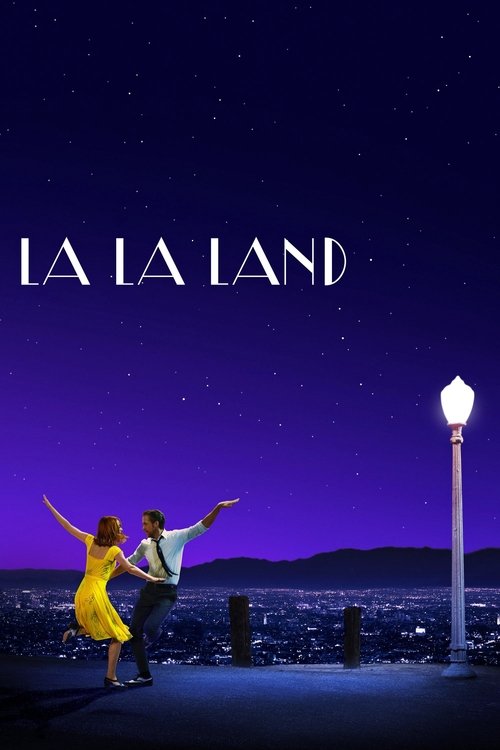
The film's third major symbol is the bench above LA where Mia and Sebastian first dance together at golden hour. J.V. Hart's craft essay on the film's ending tracks the bench across its three appearances: the magical original-meeting moment, the moment Sebastian sits there alone after his band tour, and the moment the camera returns to it in plain daylight years later — by which point the same view, Hart notes, has been transformed "from magical to ugly and garish."3 The bench is the film's measuring stick. The same physical site reads as paradise, as loss, and as exhausted reality depending on which season and which version of Mia and Sebastian's life the audience is being shown. Hart's reading is that the bench is what lets the film's ending function as more than a beat: it is the device through which Chazelle can stage the alt-timeline montage as a returned-to-place rather than a free-floating fantasy.
The three symbols share an architectural logic. The dress code times the seasons. The planetarium holds the central feeling. The bench measures the distance the lovers have walked from it.
Themes
Drawing on Damien Chazelle's Cinemablend interview with Sean O'Connell, Damien Chazelle on Screenwriting from Iowa (Scott W. Smith), J.V. Hart's Hart Chart craft essay on the ending, Lexy Perez's Hollywood Reporter feature with Chazelle, Berger, and Stone, and Owen Gleiberman's Variety review (Venice).
The themes of La La Land (2016) are three: the old Hollywood musical deliberately grounded in real life where the romantic ending does not arrive, the arithmetic of dreams versus love that Damien Chazelle frames as a finite trade-off, and the bittersweet ending earned by every scene that precedes it rather than imposed at the last minute. Three themes hold La La Land together: a deliberate refusal of the Hollywood-musical "happily ever after," the arithmetic of dreams versus love that Damien Chazelle has named as the film's core question, and a craft argument about why the bittersweet ending earns the reader's trust rather than betraying it.
The old musical, grounded
Chazelle has been explicit, across multiple press conversations, that the film's project is a conscious counter-move to the form it lovingly imitates. Speaking to Lexy Perez at The Hollywood Reporter, he framed the intent in plain terms: "The idea was to take the old musical, but ground it in real life where things don't always exactly work out."4 Owen Gleiberman's Variety review caught the cinematic dimension of the same move: "La La Land is set in contemporary Los Angeles, but its heart and soul are rooted in the past."5 Together those two framings name what makes the film unusual. La La Land borrows the staging vocabulary of 1940s-50s Hollywood musicals — primary-colour blocking, CinemaScope, full-cast numbers — while refusing the form's signature compensation: the romantic ending. The film treats the old musical's form as the right vehicle to deliver a closing argument the old musical was specifically engineered not to deliver.
Dreams versus love, as arithmetic
The film's central thematic question is the trade-off Chazelle has named in his own voice. To Scott W. Smith at Screenwriting from Iowa he framed the romance as finite by design: "I knew I wanted to tell a story about a romance that doesn't last forever... two ships passing in the night."2 To the same interviewer, on the arithmetic itself: "Some dreams come true, some don't. This wouldn't be an honest movie if every dream came true."2 What is unusual about La La Land's treatment of the theme is that it does not resolve it in either direction. Mia gets her acting career; Sebastian gets his jazz club; neither gets the other. The film's argument is not that dreams beat love or love beats dreams — it is that the calculation is real, that ambitious twenty-somethings in Los Angeles make a version of it every day, and that pretending otherwise (the Hollywood compensation) would be the more dishonest film.
Why the ending earns trust
A third theme works as a craft argument. Sean O'Connell's Cinemablend conversation with Chazelle captured the writing-process logic behind the controlled landing: "The ending was more or less exactly what it is in the film, pretty early on, but it's the stuff that led up to it that gets rewritten a ton,"1 Chazelle said — and named the reason: "It's just nice to know what your destination is, and then just backtrack, or figure out what is the most elegant way to build to that."1 J.V. Hart's craft essay on the ending names the same dynamic from the screenplay-architecture side: "Sometimes we don't get what we want even when we get what we need."3 The two framings are doing the same job. La La Land lands its bittersweet ending because every scene leading to it has been pre-shaped to support that ending — the primary-colour dress code, the seasonal title cards, the bench, the alt-timeline montage all converge on a single emotional position the writer-director knew he was building toward from page one.
Final shot interpretation
Drawing on Damien Chazelle's Cinemablend interview with Sean O'Connell, Damien Chazelle on Screenwriting from Iowa (Scott W. Smith), J.V. Hart's Hart Chart craft essay on the ending, and Lexy Perez's Hollywood Reporter feature with Chazelle, Berger, and Stone.
The final shot of La La Land (2016) is a three-stage release: five years after they part, Mia walks into Sebastian's new jazz club with another man, Sebastian plays the theme and the film replays itself as the alternate-timeline version in which the two stayed together, and after the montage Mia returns to her seat and the lovers exchange one final smile across the room — recognition without recovery. The closing minutes of La La Land are structured as a controlled three-stage release. Mia walks into Sebastian's new club with the man she has married since they parted. Sebastian sees her, freezes, then plays the theme — and the film stops the present and replays the entire film as the version of itself in which Mia and Sebastian stayed together. Then the montage ends, Mia returns to her seat, and the lovers exchange one final smile across the room. Each of the three stages was deliberately engineered.
The alt-timeline montage as a "what-if"
The five-year jump and the fantasy montage were not late additions to the film. In his Cinemablend conversation with Sean O'Connell, Damien Chazelle described the editing-room priority that built the closing sequence: "The ending was the first thing we cut in the cutting room, before we touched any of the rest of the movie."1 The reason was structural. The montage is a re-edit of scenes the audience has already seen, with small alterations — a different choice, a different room, a different person at the piano — that would have produced the life Mia and Sebastian never quite had. Cutting it first ensured the rest of the film could be calibrated to land that particular emotional weight. J.V. Hart's craft essay on the same sequence captures the screenwriting cost of getting there: "The satisfying ending eluded us in the first draft... The audience missed a main romantic character."3 The fix was not to give the audience what they wanted; it was to give them what they needed in a register they would accept.
Why the final glance reads as hopeful, not tragic
Chazelle has been consistent in pushing back on the "tragic ending" framing of the film. To Scott W. Smith at Screenwriting from Iowa: "I didn't really see it as a tragic ending. I think here I wanted there to be a real hope to the ending."2 To Lexy Perez at The Hollywood Reporter, on the emotional logic that makes that hope coherent: "When you have two people who share a memory, there is something very pure and nothing can taint that memory."4 Producer Fred Berger gave Perez the same idea from the production side: "They'll always have each other, they needed each other to get to this place, they're better off for having known each other."4 What the production team is describing is not consolation; it is a structural claim about how the film handles its central pairing. The romance was real and it produced both of their careers. The fact that it did not last is not the failure of the romance — it is part of what the romance produced.
Stone's reading and what the camera does
Emma Stone, in the same Hollywood Reporter conversation, named the political point the film leaves the audience with: "Their love isn't any less important... the movie celebrates those loves that came before and that they're just as important as the love you have now."4 The camera honours her reading. After the montage, the film does not give Mia and Sebastian a reunion line; it gives them a glance and a smile across the club and then ends. The withholding is calibrated. A spoken reunion would have collapsed the film into the genre it has spent two hours diverging from; a refusal to acknowledge each other at all would have made the alt-timeline montage feel like a cheat. The single shared smile is what the film has been earning since the first audition scene — recognition without recovery.
The final shot's structural job is to leave the audience inside the same emotional position Mia and Sebastian have arrived at: glad of what was, clear-eyed about what is, and willing to let both readings of the romance coexist inside one closing image.
Back to the full movie guide
Plot, cast, where to watch, and similar films — without spoilers.
Open guide →Frequently Asked
What is La La Land about?
Mia, an aspiring actress, serves lattes to movie stars in between auditions and Sebastian, a jazz musician, scrapes by playing cocktail party gigs in dingy bars, but as success mounts they are faced with decisions that begin to fray the fragile fabric of their love affair, and…
Where can I watch La La Land?
See the Where to Watch section below for the current streaming, rental, and purchase options in your region.