Spoiler Warning
This article contains major spoilers for Kill Bill: Vol. 1 (2003).
So what actually happens at the end?
Kill Bill Vol. 1 (2003) ends with the Bride defeating O-Ren Ishii in a Tokyo snow garden, then crossing two names off her yellow-pad hit list as Sofie Fatale is dumped from a car trunk to deliver a deliberately incomplete message back to Bill — three Vipers still alive, the chapel massacre's authorship still unresolved, and the franchise's largest withheld piece of information dropped as the film's final whispered line.
Plot recap leading into the ending
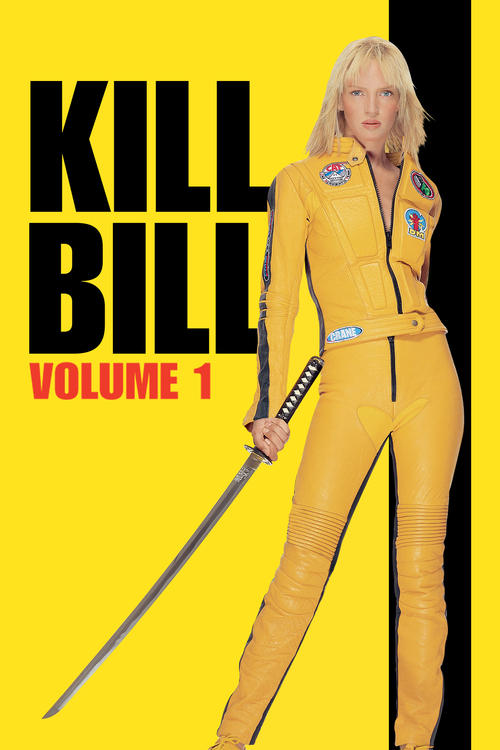
Kill Bill: Volume 1 is a 2003 American martial arts film written and directed by Quentin Tarantino. It stars Uma Thurman as Beatrix "the Bride" Kiddo, a mercenary who swears revenge on a group of assassins and their leader, Bill, after they try to kill her and her unborn child. Her journey takes her to Tokyo, where she battles the yakuza.
Symbolism
Drawing on Quentin Tarantino's Film4 interview (via Wikipedia references), A.O. Scott's New York Times review (cited via Wikipedia), and Manohla Dargis's Los Angeles Times review (cited via Wikipedia).
The symbolism of Kill Bill Vol. 1 (2003) is built from four interlocking visual systems that Tarantino lays out as inheritance rather than ornament: the canary-yellow tracksuit that quotes Bruce Lee's Game of Death directly onto Uma Thurman's body, the Production I.G. anime chapter that converts O-Ren Ishii's origin into a separate medium, the snow-garden Kurosawa quotation that turns the climactic duel into a chambara tableau, and the chapter-card grammar that announces every borrowed register as a borrowing.
The yellow tracksuit
When the Bride pulls the Onitsuka Tiger jumpsuit over her head in chapter four, the film is making a quotation the audience is meant to register on sight. The costume is Bruce Lee's from his unfinished 1972 picture Game of Death, and Tarantino has been open that the citation is the costume's primary function: the Bride is, in this stretch of the film, being dressed in the inheritance of the genre she is operating inside. The yellow is the genre's flag, and the black side-stripe is the proof that the genre is the same one Lee was building in 1972. Wikipedia's reference apparatus collects Tarantino's Film4 framing of the production budget approach in the same chapter — "Let's pretend we're little kids and we're making a Super 8 movie in our back yard, and you don't have all this shit. How would you achieve this effect? Ingenuity is important here!"1 — and the tracksuit reads as the most efficient application of that principle: instead of inventing a costume the audience will read as belonging to the Bride, Tarantino borrows one whose meaning is already known and lets the borrowing do the work. The canary yellow is the film's clearest single piece of meta-text: this is a revenge picture, the genre is older than the film, and the heroine is wearing the receipt.
Production I.G. and the anime chapter
The four-minute O-Ren origin sequence is the film's most extreme structural commitment to citation. By switching media entirely — handing the chapter to the Japanese animation house Production I.G., the studio behind Ghost in the Shell — Tarantino acknowledges that the violence about to be portrayed is the kind he could not legally photograph in live action and the kind whose genre vocabulary belongs, anyway, to a different national tradition. The anime sequence is therefore not a stylistic flourish but an admission: the eleven-year-old O-Ren under the bed, watching her parents murdered by Boss Matsumoto's men, is a story whose visual register has, in Japanese popular culture, been animation for forty years. Switching media is the most honest available citation of where the story originates.
Kurosawa snow
When the Bride and O-Ren finally face each other in the House of Blue Leaves garden, the snow is the third major borrowing. Akira Kurosawa's late period — Ran, Throne of Blood — established a chambara grammar in which the climactic duel happens against a weather phenomenon the camera reads as moral judgement. The Vol. 1 garden duel is timed against falling snow, scored down to silence, and choreographed with the kind of pauses Kurosawa built into Sanjuro's last fight. A.O. Scott's New York Times review caught the borrowing register: "Tarantino is an irrepressible showoff...but also an unabashed cinephile, and the sincerity of his enthusiasm gives this messy, uneven spectacle an odd, feverish integrity."4 The snow is part of that sincerity — a costume the genre already owns, deployed without irony at the moment the genre needs it.
Chapter cards and the homage register
The five chapter cards are the film's connective tissue. They are the device by which Tarantino announces, at the front of each segment, the register he is about to borrow from — the Pasadena suburb of the Vernita Green chapter, the Tokyo anime of chapter three, the Okinawa sushi-bar comedy of chapter four, the House of Blue Leaves chambara of chapter five. Manohla Dargis named the resulting object in the Los Angeles Times — a "blood-soaked valentine to movies" — and pointed at its temporal location: "an ode to the time right before movies were radically secularized."5 Each chapter card is an admission. The film is not pretending to invent its own grammar; it is announcing the grammar's source and then operating it.
Themes
Drawing on Quentin Tarantino's Film4 interview (via Wikipedia references), Quentin Tarantino's IGN interview (via Wikipedia references), Colin Kennedy's Empire review, A.O. Scott's New York Times review (cited via Wikipedia), Manohla Dargis's Los Angeles Times review (cited via Wikipedia), and Roger Ebert's Chicago Sun-Times four-star review.
The themes of Kill Bill Vol. 1 (2003) are three: revenge as choreographed transaction rather than emotional release, motherhood as the film's most carefully withheld piece of information, and homage as a methodology Tarantino treats as serious filmmaking rather than self-indulgence.
Revenge as choreographed transaction
The Bride's hit list is the film's organising image, and the list is presented as a ledger: five names written on a yellow legal pad, ticked off one chapter at a time, with the Bride circling each victim's name in red ink the moment the kill is complete. Roger Ebert's four-star review for the Chicago Sun-Times caught the precision of the construction in a single clause — Tarantino was, in Ebert's reading, "effortlessly and brilliantly in command of its technique."6 The technical command is the thematic argument. The Bride is not granted catharsis by revenge; she is granted the satisfaction of a completed line on a list. Vernita Green dies in a Pasadena kitchen with her daughter present and the kill registers as a ticked checkbox more than an emotional climax. O-Ren dies in a snow garden with the same compositional cleanliness. The film treats the genre's standard revenge-as-purification logic as obsolete; what replaces it is revenge-as-task. Tarantino's own framing in IGN — that the most difficult aspect of the project was "trying to take myself to a different place as a filmmaker and throw my hat in the ring with other great action directors"2 — locates the ambition where the film locates it: in execution rather than in the protagonist's interior.
Motherhood as the withheld information
The film's largest piece of withheld information is the existence of the Bride's daughter, and the withholding is structural. The chapel sequence opens with a pregnant woman being beaten on a wedding-rehearsal floor, and Vol. 1 spends its remaining runtime allowing the audience to assume the pregnancy did not survive. The Vernita Green chapter is the volume's clearest single staging of the theme: the Bride enters a Pasadena house to kill an old colleague and finds the colleague's four-year-old daughter standing in the kitchen doorway. The duel pauses. The genre suspends. The two women agree, in a brief tactical truce, that this fight cannot happen in front of this child — and then it does happen, the child does watch part of it, and the Bride leaves the house with a steak knife in her hand and a mother dead on a cereal-stained linoleum floor. Colin Kennedy's Empire review caught the tonal register Tarantino is working in across these chapters in one phrase: "a performance from Uma Thurman as steely as the plate in her character's head."3 The steeliness is the film's argument about motherhood. The Bride is operating on a child-witness logic the genre has historically refused to acknowledge, and the film stages that operation as the most precise and most uncomfortable single set-piece in either volume.
Homage as method
The third theme is the one the film is loudest about. Tarantino's working principle — the Film4 quote about pretending to be little kids making a Super 8 movie in the back yard, building scenes around ingenuity rather than budget1 — is operating across every chapter of Vol. 1. The yellow tracksuit, the Production I.G. anime, the Kurosawa snow, the spaghetti-western chapter cards, the Tomoyasu Hotei surf-rock theme, the De Palma split-screen of the hospital sequence: each is a citation, and the film expects the audience to read the citations as part of the text. A.O. Scott's NYT review located the integrity of the approach in the sincerity of the enthusiasm — "the sincerity of his enthusiasm gives this messy, uneven spectacle an odd, feverish integrity."4 Manohla Dargis sharpened the same observation into a description of the object itself, in the Los Angeles Times: a "blood-soaked valentine to movies."5 The film is, in its own self-description, a love letter to a genre, and the love is the film's method. The Bride's revenge is the engine; the homage is the chassis; the two are inseparable because Tarantino has built the picture so they cannot be separated.
Final shot interpretation
Drawing on Quentin Tarantino's IGN interview (via Wikipedia references), Manohla Dargis's Los Angeles Times review (cited via Wikipedia), and Roger Ebert's Chicago Sun-Times four-star review.
The final shot of Kill Bill Vol. 1 (2003) is structured as a controlled information-release rather than as an emotional climax: after the Bride defeats O-Ren in the snow garden, Tarantino cuts to a black-and-white interior in which Sofie Fatale — O-Ren's mutilated lawyer-translator — is dumped from the back of a Pussy Wagon trunk into Bill's care, and a voiceover registers the question the film has been declining to answer for two hours. The closing beat is whispered, deliberately, behind a closing door: "Does she know her daughter is still alive?" Bill's question is the largest piece of information the film has withheld, and it is delivered in such a way that the audience reads the line three times before the credits finish rolling.
The choreography of the closing reveal
The structural pattern of the ending is the same pattern Tarantino has been running across the film. Information that the genre would normally deliver in the centre is held until the end; the chapel massacre's true authorship is implied rather than confirmed; the Bride's relationship to Bill is sketched only through Carradine's off-screen voice and a hand on a Hanzo hilt; the daughter the audience assumed dead in the chapel is left as a present-tense fact in the final line. Manohla Dargis named the closing register correctly in the Los Angeles Times: an "ode to the time right before movies were radically secularized,"5 meaning, in part, an ode to a period in which genre cinema was willing to organise its endings around withheld information rather than around resolved feeling. The Vol. 1 closing is a chambara cliffhanger, and it is staged that way on purpose.
Why the final line matters as method, not as twist
Tarantino's own framing of the split between Vol. 1 and Vol. 2 — given to IGN at the time — is the closest the director comes to explaining the decision: there were, in his words, "scenes that are some of the best scenes in the movie, but in this hurdling pace where you're trying to tell only one story, that would have been the stuff that would have had to go."2 Splitting the film let him preserve the chambara grammar that the snow-garden duel demanded — a final beat that does not resolve, a curtain that does not fully fall. The daughter line is therefore not a cliffhanger in the modern franchise sense; it is the structural equivalent of the closing-character title cards in late Kurosawa, a held question rather than a tease.
What the closing image actually shows
The literal final shot is not the snow garden, despite that being the volume's emotional climax. It is a black-and-white-rendered hand pulling a tarp away from Sofie Fatale's wrecked face inside a darkened interior, and a voice — Carradine's — asking the question the audience has not, until that exact second, been allowed to know was open. Roger Ebert framed the technical command of the entire object in one clause for the Chicago Sun-Times — "effortlessly and brilliantly in command of its technique"6 — and the closing is the film's strongest single defence of that judgement. The image is composed for information transfer, not for catharsis. Vol. 1 is, by its own design, half a film. The closing shot is the cleanest possible argument that the other half exists and that the audience is going to need to see it.
Back to the full movie guide
Plot, cast, where to watch, and similar films — without spoilers.
Open guide →Frequently Asked
What is Kill Bill: Vol. 1 about?
An assassin is shot by her ruthless employer, Bill, and other members of their assassination circle – but she lives to plot her vengeance.
Where can I watch Kill Bill: Vol. 1?
See the Where to Watch section below for the current streaming, rental, and purchase options in your region.