Spoiler Warning
This article contains major spoilers for Inception (2010).
So what actually happens at the end?
Inception (2010) ends with Cobb finally walking out of the Los Angeles airport, past Michael Caine's Professor Miles, into his garden in Pasadena, where Phillipa and James turn to face him for the first time in the film. He sets his spinning top — Mal's totem, not really his own — on the dining-room table to check whether he is awake, then walks away from it to embrace his children before the audience sees the result. The top is still spinning when Christopher Nolan cuts to black. The shot wobbles, which has fuelled a decade of dream/reality debate, but Nolan and producer Emma Thomas have repeatedly framed the gesture another way: the emotional point of the shot is that Cobb is not looking at it. He has stopped needing the answer. The film is also resolved at the level of plot: Saito kept his promise, Cobb's name has been cleared, and the inception on Robert Fischer Jr. — splitting up his father's energy empire — has technically succeeded back in the upper layers of the dream. Mal, the projection of Cobb's dead wife who has sabotaged every previous run, has been confronted in limbo and left there. Whether the top falls or keeps spinning is the question the film hands to the audience; whether Cobb cares any longer is the question the film answers on his behalf. The image is engineered so both readings are legitimate, and so the legitimate reading — for the character, if not for the viewer — is the one in which it does not matter.
Plot recap leading into the ending
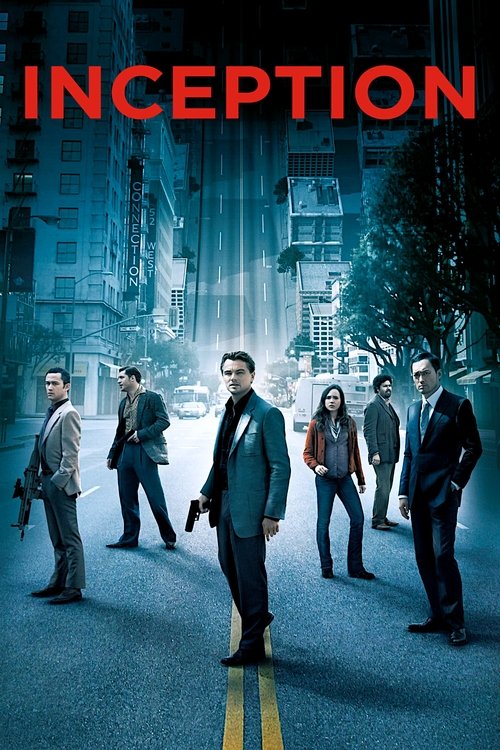
Inception is a 2010 science fiction action film written and directed by Christopher Nolan, who also produced it with Emma Thomas, his wife. The film stars Leonardo DiCaprio as a professional thief who steals information by infiltrating the subconscious of his targets. He is offered a chance to have his criminal history erased as payment for the implantation of another person's idea into a target's subconscious. The ensemble cast includes Ken Watanabe, Joseph Gordon-Levitt, Marion Cotillard, Elliot Page, Tom Hardy, Cillian Murphy, Tom Berenger, Dileep Rao, and Michael Caine.
Timeline of the reveal
The kick cascade begins
Yusuf's van plunges off the bridge in the rainy-Los-Angeles dream level, triggering zero-g in Arthur's hotel layer and avalanche conditions in Eames's mountain-fortress layer. The team has rigged synchronized 'kicks' — falling sensations — to pull everyone back up the dream stack at once. The timing has to land within seconds of itself or the sleepers are stranded a level deeper.
Fischer enters limbo with Ariadne and Cobb
Fischer is killed by Mal in the mountain layer, dropping him into the team's shared limbo. Ariadne and Cobb follow to retrieve him. They land on the eroded beach of the city Cobb and Mal built together over fifty subjective years — the architecture of his guilt, kept alive in unconstructed dream space.
Cobb confronts Mal in the apartment
Inside the recreated Paris apartment, Cobb finally tells the projection of his wife the truth he has spent the film hiding: that the real Mal died because he planted the idea in her mind that her world was not real, and he can no longer carry her as a memory pretending to be a person. He chooses Phillipa and James over the projection, and lets Mal go.
Fischer at the safe and the inception lands
Eames revives Fischer at the snow-fortress hospital bed in time for him to open the safe and find the pinwheel and the dying-father moment the team has planted. Fischer registers the implanted idea — 'I want to be my own man' — and the inception succeeds. Saito, who has aged into an old man in limbo, recognises Cobb and remembers their deal.
The plane lands at LAX
Everyone wakes on the Sydney-to-LA flight. No words are spoken. Saito picks up the airphone. As Cobb clears US customs, the officer stamps his passport without comment — Saito has cleared the murder charge. Miles is waiting at arrivals. The journey home, which has been impossible for the entire film, is suddenly trivial.
The top, the children, the cut to black
Cobb sets the spinning top down on the dining-room table inside the Pasadena house and walks out to the garden, where Phillipa and James turn around at last. The top wobbles. Nolan cuts to black before resolving whether it falls. Cobb does not look back to check.
Character motivations
Cobb agrees to the Fischer job because Saito has offered the one thing money cannot buy him: a phone call that clears the homicide charge keeping him out of the country where his children live. By the third act his motive has narrowed to a single image — Phillipa and James turning around — and his obstacle is internal: the projection of Mal he has been smuggling into every dream. Letting her go is what frees him to come home.
Mal is not the real Cobb's wife; she is his guilt rendered as a person, an unconscious sabotage routine that surfaces in every dream he enters. Her motive is to keep him with her in their constructed afterlife, which to her — to him — is the marriage he ended by talking his wife out of believing in reality. In the limbo apartment she still asks him to stay because that is the only request his guilt knows how to make.
Fischer's grief is the lever the team pulls. They engineer a dream in which his dying father, instead of withholding approval, hands him permission to walk away from the empire and become his own man. Fischer's motive in the third act is therefore borrowed: the team has manufactured the catharsis he could not get in waking life, and the inception works because he wanted to believe his father had loved him.
Saito's motivation is competitive, not philosophical: breaking up Fischer's energy monopoly preserves his own corporation. To make that happen he gambles on a man wanted for murder by promising a single phone call across borders he controls. Aged into limbo, his deal with Cobb persists — the older man who remembers the younger man's terms is the one who places the call once they wake on the plane.
Ariadne is the team's architect, but in the third act she becomes its therapist. She is the only crew member who has seen Cobb's elevator of repressed memories, and she follows him into limbo not because the mission requires it but because she has decided Cobb cannot finish the job alone. Her motive is rescue — and, by the end, refusal to let his guilt take Fischer down with him.
The final scene
The closing scene of Inception is staged like a sleight-of-hand magic act in three movements. Cobb walks through the Pasadena house — the same set the film has shown us only in flickering, half-finished memories until now — and the camera tracks him almost in a single take. He stops at the dining table, takes the spinning top out of his jacket, sets it down. The action is small and unhurried. The grandfather projection — Miles — is still in the foreground; the children's laughter is coming through the open French doors. The top spins. Cobb turns away from it. He walks past the table and out into the garden, where Phillipa and James — finally, for the first time in the film not turned away or just out of focus — pivot to face him. The camera, which has been at his shoulder, cuts back to the top on the table. It is still spinning. It wobbles. Christopher Nolan cuts to black. Hans Zimmer's "Time" lands its final chord under the title card. Producer Emma Thomas has explained, in interviews Nolan has co-signed, that the engineered wobble is not the punchline; the engineered indifference is. The shot is composed so that the audience watches the top while Cobb does not — the only character whose stake in the question is real has walked out of the frame the question still occupies. Michael Caine, who is in the final scene and has said as much at the BFI's Film4 Summer Screen[^3], has volunteered that Nolan told him a simple rule on set: if Caine is in the scene, it is real. Whether that's a director's tell or a flattering line for an actor, the film itself codes the answer the same way — Cobb's children are wearing different clothes than in his recurring dream, their faces are no longer just a back-of-head silhouette, the wedding ring is gone from his hand, and the chase across the world is over. The closing shot is engineered as a Rorschach test for the audience and as a graduation for the character: he has stopped reading the top because the question the top is designed to answer no longer governs his life.
Symbolism
Drawing on Christopher Nolan in Variety (via Zack Sharf, July 2023), Roger Ebert's original four-star review, and RogerEbert.com 10th-anniversary retrospective.
The symbolism of Inception (2010) is built around three closely-watched objects — the spinning top, the wedding ring, and the totem itself as a category — each of which is engineered to tell Cobb whether he is awake while simultaneously hiding the fact that the character has stopped trusting any of them. Inception is structured around a small inventory of physical objects that are explicitly named as reality-tests inside the film's invented psychology, and the closing shot weaponises the audience's relationship to those objects against its own protagonist. Read together, they form a single argument about whether perception can ever do the work the dreamer asks of it.
The spinning top
Cobb's top is, on the surface, the simplest object in the film: it falls in reality, it spins forever in a dream. But the top originally belonged to Mal, his dead wife — it was her totem, which by the film's own rules means it cannot perform its job for him. A totem in Inception is meant to be uniquely calibrated to its owner's hand: the owner alone knows its weight, its centre, the rhythm of its fall. By inheriting Mal's top, Cobb has been navigating six layers of shared dreams with a measuring instrument calibrated to someone else's nervous system. Christopher Nolan, asked repeatedly about the closing shot, has consistently redirected the question to the same place. In a 2023 Variety piece tied to a screening Q&A, Zack Sharf reported Nolan's now-canonical reframe: producer Emma Thomas had pointed out that "the point of the shot is the character doesn't care at that point" — Cobb has moved on, he is with his children, and the ambiguity the audience hears as suspense is, for him, no longer a live question.1 The top therefore does double duty as symbol: inside the diegesis it is the diagnostic Cobb has used since Mal's death; at the level of the film's argument it is a measuring instrument the protagonist has decided to stop reading.
The wedding ring
The film's quieter, smuggled-in totem is Cobb's wedding ring. Across the runtime, a pattern several careful viewers — and a steady tradition of critics writing in retrospect — have charted is that Cobb wears the ring when he is in a dream with Mal and is not wearing it when he is in waking reality.5 In the final Pasadena sequence the ring is absent. Read against the canonical Nolan answer that Cobb's emotional state is what closes the film, the wedding ring acts as a private symbolic system the script never speaks aloud: the visible totem (the top) is what the audience watches; the smuggled totem (the ring) is the one that, on a frame-by-frame check, would tell anyone who noticed exactly which side of the dream line each scene lies on. The symbolism is therefore not about which object is "the real" totem but about the film's willingness to maintain two competing systems of evidence — one designed for the character and one designed for the audience — so that no single artefact can settle the question alone.
The totem as category
Beyond the individual objects, the totem as a concept is itself the film's central image. Roger Ebert's original review names the issue plainly: in Inception the question of whether we are watching memory, dream, or waking life is "difficult to say — even, literally, in the last shot," and the film, far from being damaged by that opacity, treats opacity as part of its design.4 The totem is a symbol of the dreamer's desire for a reliable test, and the film's argument is that the desire and the test are not the same thing. Cobb's discovery is that no portable instrument can do the job of self-trust. The closing image — the top still spinning, the protagonist not looking at it — is the film's most concentrated symbolic statement: a totem is only as good as the dreamer who agrees to read it, and Cobb has stopped agreeing.
Mal as projection-symbol
Threaded through this is Mal herself. The script treats her clearly: she is not a ghost, she is not a returning villain, she is Cobb's guilt rendered as a recurring projection inside his subconscious. Every time she appears she is a symbol of the unfinished case Cobb is trying to close in himself, and she destabilises the team's missions because his unconscious is hosting the saboteur. The film's third act gives her one last appearance in limbo, in the Paris apartment, where Cobb names the truth out loud: he planted the seed of inception in her years before, and she carried it into death. The act of leaving her in limbo is the act of letting the symbol go — which is also why the closing shot can afford to be ambiguous about the top. The film's deepest reality-check is not metaphysical; it is the moment Cobb finally agrees that the woman in the apartment is not his wife.
Themes
Drawing on Christopher Nolan in Variety (via Zack Sharf, July 2023), Michael Caine at the BFI (via Christy Admiraal, Nerdist), and Roger Ebert's original four-star review.
The themes of Inception (2010) are three: grief as the engine of every dream the film stages, the cost of an idea once it is planted inside another consciousness, and the relationship between belief and reality in a world where the dreamer has stopped trusting his instruments. Three themes hold Inception together, and each of them ties the heist plot back to the same private wound at Cobb's centre: grief as the mechanism that animates every dream, the moral cost of planting an idea inside another mind, and the question of whether belief is recoverable when the dreamer has lost his reality-checks.
Grief as engine
The film looks like a corporate-espionage heist, but its operating logic is bereavement. Cobb cannot enter a dream without his dead wife sabotaging it from inside his own subconscious; he cannot direct a team without the projection of his guilt walking into the room. The Fischer job is, on paper, an industrial assignment — break up an energy empire — but it is engineered for Cobb only because the deal pays him the one currency that matters to him, which is the chance to be in the same country as Phillipa and James. Roger Ebert's review caught this register before most: Cobb, he wrote, is "motivated to risk the dangers of inception because of grief and guilt involving his wife Mal (Marion Cotillard), and their two children," and Mal "functions as an emotional magnet" through the otherwise endlessly shifting dream geography.4 The film's third act is therefore not a plot resolution; it is a grief resolution. Cobb succeeds at the inception only after he speaks Mal's death out loud, in the apartment in limbo, to the projection that has been impersonating her. The heist completes because the grief stops directing the team.
The cost of an idea
The film's title is the verb the team performs on Fischer, but it is also the verb Cobb performed, off-screen and years before the runtime, on Mal. Mal died in waking life because Cobb planted the smallest possible idea inside her — that her world was not real — when he could not get her to come up from limbo with him. The idea took root; it followed her out of the dream into the waking marriage; and it killed her. The film is, in this sense, a confession picture. The Fischer job replays Cobb's original sin with the procedure inverted: this time the team is engineering paternal permission rather than ontological doubt, and this time the planted idea is meant to free its host rather than destroy him. But the film never quite lets Cobb off the hook. The success of the Fischer inception is, by the team's own analysis, indistinguishable from the success of the Mal inception at the level of mechanism — both work because the host's grief was the soil — and the moral question is whether the team has the right to grow ideas in someone else's mourning.
Belief without instruments
The third theme is the one the closing shot dramatises. Cobb's totem cannot do its job — the top was Mal's, the rules are corrupted at the source — and the film's argument is that no portable instrument can. Belief in reality, by the end of the runtime, is something Cobb chooses without evidence. Christopher Nolan has framed the question in his own voice in the canonical Variety interview: Cobb has "moved on and is with his kids," and the ambiguity in the closing shot is "an intellectual one for the audience" rather than an emotional one for the character.1 Michael Caine's anecdote about Nolan's on-set rule — if Caine is in the scene, it is real3 — has been widely cited as a director's quiet tell, but its more interesting function is thematic: it shows that the film has private answers it has chosen not to publish, because the publishable answer is the one the character has made about himself. Cobb's last decision is to stop using instruments. He sets the top down, walks away, and embraces his children. The film treats that as recovery, not as faith, and the difference is the point.
Architecture as ethics
Underneath the three themes is a quieter argument about the team's labour. Ariadne builds dream cities; Eames forges identities; Yusuf brews sedatives; Arthur runs logistics. None of them, except Ariadne, asks whether their work has a moral surface. Ariadne is the only character who follows Cobb into the elevator of his repressed memories and the only one who refuses to let the mission proceed without first dealing with the saboteur he is hiding. The film's ethical centre is therefore in the architecture, not the heist — and the engineer is the one who insists on locating the wound. This is why the third-act limbo sequence works structurally as well as emotionally: the dream's architect has done the work the dreamer could not, and the building they have made together is the room where Cobb can finally tell the truth.
Final shot interpretation
Drawing on Christopher Nolan in Variety (via Zack Sharf, July 2023), Michael Caine at the BFI (via Christy Admiraal, Nerdist), Roger Ebert's original four-star review, and RogerEbert.com 10th-anniversary retrospective.
The final shot of Inception (2010) is the spinning top on the Pasadena dining-room table, photographed in close-up, wobbling at the moment of cut-to-black — and the gesture the audience has already watched, just before the cut, is the more important half of the image: Cobb has placed the top down, turned his back on it, and walked into the garden to embrace his children, and the only person in the film whose stake in the question is real has refused to wait for the answer. The closing seconds of Inception execute one cut and one cut only — the spinning top in close-up, the wobble, the hard black — and the decade of debate the cut has generated is, in a clean reading, exactly what the film was engineered to produce.
What the shot literally shows
Cobb walks into the Pasadena house. He sets the top spinning on the dining-room table, then turns and walks out into the garden where Phillipa and James, in different clothes from the recurring dream, finally turn around to face him. The camera cuts back to the table for the last beat. The top is wobbling. Nolan cuts to black before the audience can see it fall or right itself. Two visible cues hand the audience a partial answer if they want one: the top is wobbling rather than spinning cleanly, which is what a top is doing in waking reality and not in a dream; and Cobb's wedding ring, which several critics have catalogued as appearing in dream scenes and absent in waking ones, is not on his hand.5
Nolan's canonical reframe
Christopher Nolan has been asked this question more times than any other in his career, and his answer in the canonical Variety interview tied to a 2023 anniversary Q&A is the one most often cited. Producer Emma Thomas had pointed out to him, he said, that "the point of the shot is the character doesn't care at that point" — Cobb has "moved on and is with his kids," and the ambiguity the audience reads as suspense is, for the protagonist, no longer a live concern. Nolan framed the ambiguity itself as "intellectual" rather than "emotional," and located it firmly on the audience side of the screen.1 The shot is therefore not constructed to hide whether the top falls; it is constructed to hide which question the film is actually asking.
Michael Caine's on-set rule
Michael Caine, who is in the final scene as Cobb's father-in-law Miles, has volunteered his own reading on multiple occasions — most cleanly at the BFI's Film4 Summer Screen, where he repeated a rule he says Nolan gave him before they shot: if Caine is in the scene, it is real; if Caine is not in it, it is a dream. Christy Admiraal's Nerdist write-up of the festival Q&A includes Caine's exact phrasing about the moment the top "drops at the end."3 Caine appears in the final scene. Whether the rule is a director's quiet tell or a flattering on-set shorthand for an actor, the film's other visual evidence — wedding ring absent, children's clothes different, Miles physically present — lines up in the same direction. The film is not refusing to answer; it is refusing to underline its answer.
Roger Ebert and the emotional close
Roger Ebert's original review identified the move the film is making in the closing seconds before any of the above interviews existed. Whether the audience is watching Cobb's memories or his dreams "is difficult to say — even, literally, in the last shot," Ebert wrote, but the film is "immune to spoilers" precisely because the ending's function is not to resolve the metaphysical question.4 The emotional resolution — Cobb walking out of the frame the top still occupies — outranks the metaphysical one. The 10th-anniversary retrospective at Ebert's site doubles down on this read: the closing shot's job is to register that Cobb has stopped looking, and the audience's job is to decide whether that is enough.5
Why the shot was engineered to wobble
A frequent fan objection is that if Nolan had wanted the audience to read the ending as real, he would have shown the top fall. The answer, audible in his own interviews, is the opposite: a fall would have made the shot a riddle with a key. The wobble does what Nolan repeatedly says he wanted — it preserves the dream/reality question as a permanent intellectual prompt for the audience while letting the character move out of its jurisdiction. As he told Variety, with the shot already in hand he has watched audiences "groan" at the cut to black; the groans are the engineered reaction.1 The film is closing on the side of the character, not the side of the audience, and the design of the shot is the cleanest possible declaration of that priority.
What the final shot is for
The closing image is, at its simplest, a single thesis about belief without instruments. Cobb does not have a reliable totem — the top was Mal's, the system is corrupted at its origin — and the film argues that no portable instrument can do the work the dreamer keeps asking it to do. The last shot is not the answer to whether the top falls. It is the answer to whether Cobb is willing to live without one. He is. He embraces his children. Hans Zimmer's "Time" lands its final chord. Nolan cuts to black. The film closes on the side of recovery, with the question still rotating on the table behind it.
Back to the full movie guide
Plot, cast, where to watch, and similar films — without spoilers.
Open guide →Frequently Asked
Does the spinning top fall at the end of Inception?
Nolan deliberately cuts to black before the top resolves, so the literal answer is that the film does not tell you. The shot is engineered so the top wobbles — which is what a totem does in waking reality and not in a dream — and many viewers read that wobble as evidence the top would have toppled. But Christopher Nolan has said in interviews tied to the 2023 re-release[^1] that producer Emma Thomas pointed out what the shot is actually doing: Cobb is not looking at the top, and his indifference is the emotional resolution. Whether the totem falls is left to the audience; whether Cobb cares is decided by the character.
Is the spinning top really Cobb's totem?
No — and this is a regularly missed beat. The top originally belonged to Mal. In the film's logic, a totem only works as a reality-check if its owner is the only person who knows its precise weight and behaviour, which means Cobb has been using a totem that, by his own rules, cannot reliably tell him whether he is dreaming. Several critics, including writers at Roger Ebert's site in the 10th-anniversary retrospective[^5], have noted that the more reliable cue at the end is Cobb's wedding ring, which he wears only when he is in a dream with Mal and which is absent in the final Pasadena scene.
Did the inception on Fischer actually work?
Yes — the film treats the inception as successful. In the limbo-adjacent snow-fortress level, Fischer opens the safe at his dying father's bedside and finds the pinwheel and the line 'I was disappointed that you tried,' which the team has reframed as paternal permission. When Fischer wakes on the plane, he is visibly moved, and the implication carried forward is that he will break up his father's energy empire — Saito's actual commercial motive for hiring Cobb in the first place. The film offers no later scene confirming the corporate dissolution, but the inception itself plants cleanly inside Fischer's grief, which is exactly what the team designed it to do.
What is limbo, and why does Saito get stuck there?
Limbo, in the film's invented neurology, is unconstructed shared dream space — the level you fall into if you die while sedated too deep to wake. Subjective time inside limbo runs vastly faster than upstairs, so a few minutes in the upper dream can be decades down there. Saito is shot by Fischer's projections in the first dream level and, because Yusuf's sedative is too strong for the kick to expel him cleanly, his consciousness drops all the way down to limbo, where he ages into an old man waiting at a table while Cobb tracks him. When Cobb finds him and reminds him of their deal, Saito is the one who must voluntarily choose to wake — which is why the LAX phone call is treated, by the film, as a kept promise rather than a guaranteed outcome.
Why does Cobb leave the top spinning and walk away?
Because the entire arc of the film has been Cobb learning to stop letting the dream-or-reality question govern his behaviour. Mal died in real life because she could no longer tell the difference and chose, fatally, that her world was not real. Cobb has spent the film carrying her projection precisely because he has never fully resolved whether he can trust his own perception. Walking away from the totem is the gesture in which he refuses, for the first time, to put that question above his children. It is not that he has answered it; it is that he has decided his life cannot wait on the answer. Critics like Roger Ebert read the ending in exactly this register — the emotional resolution outranks the metaphysical one[^4].