Spoiler Warning
This article contains major spoilers for Dune (2021).
So what actually happens at the end?
Dune: Part One (2021) ends with Paul Atreides killing Jamis in the Fremen Tahaddi duel — his first kill — the act through which Stilgar's clan accepts Paul and Lady Jessica as one of them. The film closes on Chani turning to Paul on the dune crest at sundown and saying, 'This is only the beginning,' a line that names Part One as a setup for the war Paul's prescient visions have been promising.
Plot recap leading into the ending
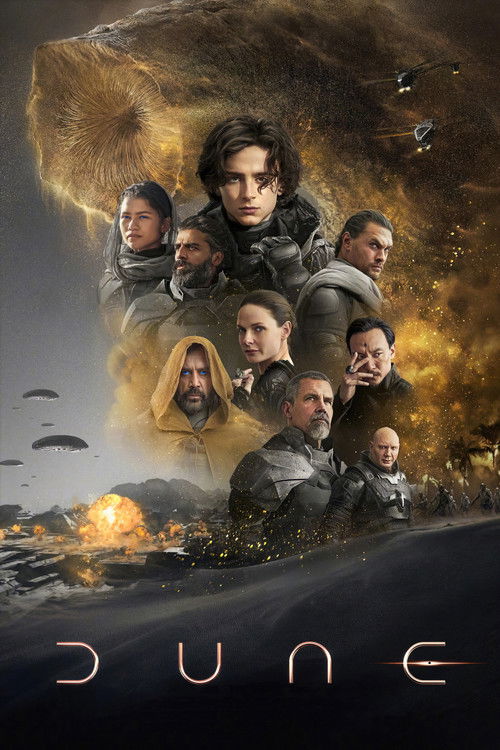
Dune is a 2021 American epic space opera film co-produced and directed by Denis Villeneuve, who co-wrote the screenplay with Jon Spaihts and Eric Roth. It is the first of a two-part adaptation of the 1965 novel by Frank Herbert and the first installment in Legendary Pictures' Dune film series. The cast includes Timothée Chalamet, Rebecca Ferguson, Oscar Isaac, Josh Brolin, Stellan Skarsgård, Dave Bautista, Stephen McKinley Henderson, Zendaya, Chang Chen, Sharon Duncan-Brewster, Charlotte Rampling, Jason Momoa, and Javier Bardem. Set in the distant future, the film follows Paul Atreides as his family, the noble House Atreides, is thrust into a war for the deadly and inhospitable desert planet Arrakis.
Symbolism
Drawing on Yessenia Funes's Atmos essay (citing Farhana Sultana, Syracuse University), Patrick J. D'Silva's Revealer essay on Dune's Arabic-Islamic layer, and Gabrielle Bondi's Inverse ending breakdown.
The symbolism of Dune: Part One (2021) is built from three systems: the spice melange that functions simultaneously as colonial commodity and Fremen sacrament, the Arabic-Islamic language layer the film carries over into Fremen titles like "Lisan al-Gaib" and "Mahdi," and Paul Atreides's prescient visions that stage his interior as a malleable rather than fixed future. Three symbol systems anchor Dune: Part One: the spice melange that powers the planet's economy and the Fremen body, the Arabic-Islamic language layer the film carries over into the Fremen culture it stages, and the prescient visions through which Paul's interior is made cinematic. Each does at least two jobs.
The spice melange
Spice is both economy and sacrament. Yessenia Funes's Atmos essay frames the Fremen relationship with it in pointed terms: "For the Fremen, spice is the sacred hallucinogen which preserves life and brings enormous health benefits."1 The film stages this dual register early — the Imperium's briefing reduces spice to the most valuable substance in the universe, a commodity whose extraction is the entire purpose of an Atreides stewardship on Arrakis, while the Fremen treat it as the substance their bodies, eyes (the iconic blue-on-blue), and rituals are organised around. The cinematic effect is that the same object functions as a colonial product (the resource the Atreides have been sent to harvest) and as a sacred presence (the substance suffusing every dream Paul has and every breath every Fremen takes). When Gabrielle Bondi writes in Inverse that Paul's "visions have also increased in intensity while in the desert and exposed to spice melange,"4 she is naming the device that makes spice's two registers collapse into one image: the more Paul breathes spice, the more he sees, and the more the desert pulls him into the version of himself the prophecy has been waiting for.
The Arabic-Islamic language layer
The second symbol cluster is verbal. Patrick J. D'Silva's Revealer essay names the cultural source the film draws on without ambiguity: "I cannot think of another science fiction franchise that so clearly draws on Arabic terminology, Islamic theology, and stereotypically 'Middle Eastern' culture."2 The film keeps Fremen titles — "Lisan al-Gaib," "Mahdi," the broader prophet-figure architecture they carry — and uses them to mark the Fremen as a coded real-world Indigenous and Muslim population whose desert spirituality is being read by a white off-world heir. The language layer is therefore not flavour. It primes every Fremen scene as a story about a stranger entering a culture that has its own pre-existing categories for him — even if those categories, as D'Silva tracks, were partly engineered by the Bene Gesserit to be received in exactly this way.
Paul's visions
The third symbol is interior. Paul's prescient dreams — Chani's face before he meets her, the crysknife that he will be handed, the holy banner unfurled across a planet — are the device through which the film stages its argument about destiny versus agency. Bondi's reading puts the symbol against Part One's actual climax: the visions are not deterministic blueprints. Paul foresees being stabbed with the crysknife, and Chani's act of handing it to him reroutes that very prediction; the same blade kills Jamis instead.4 The crysknife is therefore a small symbol the film treats as the visible token that the future is malleable, that Paul's gift is to perceive rather than to fix.
The three symbols cluster around one argument. Spice is the substance that connects Paul to the desert; the Arabic-Islamic language layer is what the desert has already been shaped by before he arrived; the visions are what the substance and the desert combined produce inside his head. Each forces the audience to read the same off-world heir in two registers at once — the prince the Atreides line has produced, and the stranger a culture has been engineered to receive.
Themes
Drawing on Yessenia Funes's Atmos essay (citing Farhana Sultana, Syracuse University), Patrick J. D'Silva's Revealer essay on Dune's Arabic-Islamic layer, and David Crow's Den of Geek ending explainer.
The themes of Dune: Part One (2021) are three: spice as a thinly-veiled fossil-fuel and resource-extraction allegory, the Bene Gesserit Missionaria Protectiva as Frank Herbert's religion-as-mass-control critique, and the white-savior structure the film sets up without yet resolving. Three themes hold Dune: Part One together as more than a CGI epic: spice as a thinly veiled resource-extraction allegory, the religion-as-mass-control critique baked into Herbert's Bene Gesserit, and the white-savior structure the film stages without yet resolving.
Spice as fossil fuel
Yessenia Funes's Atmos essay names the political register the film is operating in by drawing on the Syracuse University scholar Farhana Sultana: the spice wars track 20th- and 21st-century fossil-fuel imperialism in the Middle East, and the film stages this through an architecture that places Arrakis as a colonial outpost run by the highest-bidding noble House on behalf of an emperor who never sets foot there.1 Funes pushes the allegorical register harder still: "Our hyper-consumptive lifestyles that drive climate change come at the expense of people of color around the world."1 The spice the Atreides have been sent to manage is not just a sci-fi MacGuffin; the film expects the audience to read it as a recognisable real-world commodity, and to register the political consequences of that recognition the moment Liet-Kynes's two faces — Imperium judge in one scene, Fremen kinswoman in another — are placed side by side.
Religion as mass control
The film's second thematic move is more granular. Patrick J. D'Silva's Revealer essay reads the Bene Gesserit's centuries-long prophecy-installation programme — the Missionaria Protectiva seeding Fremen myths with placeholders an Atreides-trained mother and son could later step into — as Herbert's critique of religion-as-mass-control: a tool by which an outside power can leverage Indigenous faith. D'Silva identifies a specific tonal choice the film makes in the wrong direction: Villeneuve plays parts of Stilgar's devotion to the Lisan al-Gaib prophecy for laughs2 — a register D'Silva argues works against the very critique the source material engineered. The thematic point is sharp: in Dune, faith is a weapon, and Part One keeps having to choose, scene by scene, whether to honour or undercut that argument.
The white-savior structure
A third theme follows from the second. David Crow's Den of Geek essay names what the closing minutes are setting up: "The table is now set for Paul to step into a lofty, Christlike role."5 Crow reads Paul's particular advantage as a stacked combination of breeding, training, and substance: "Paul has almost superhuman abilities from his genetics and Jessica's upbringing... and when those gifts are altered further by the spice melange's psychotropic attributes... well, things are about to get weird."5 Part One does not yet show Paul fully assuming the Mahdi position the Fremen are coded to give him; it shows him being prepared to be received that way — the prince with the prescient dreams, the off-world mother with the Bene Gesserit voice, the desert population with the Missionaria Protectiva prophecy waiting. Villeneuve has been vocal in interviews that the project is a critique of the savior narrative rather than an endorsement of it, but the film also leaves the audience inside the uncomfortable structural fact that the off-world heir, with his white mother and his prescient visions, is on the verge of being received as a desert prophet by a population that has been long-engineered to receive him.
Final shot interpretation
Drawing on Yessenia Funes's Atmos essay (citing Farhana Sultana, Syracuse University), Denis Villeneuve's Empire spoiler interview with Ben Travis, Gabrielle Bondi's Inverse ending breakdown, and David Crow's Den of Geek ending explainer.
The final shot of Dune: Part One (2021) is a small image at desert sundown: Paul Atreides has just killed Jamis in the Fremen Tahaddi duel — his first kill — Stilgar's clan has accepted Paul and Lady Jessica as Fremen, and Chani turns to him on the dune crest and says "This is only the beginning," naming Part One as the setup for the war Paul's prescient visions have been promising. Dune: Part One ends on a deliberately small image: Chani turns to Paul on a desert ridge at sundown and says, "This is only the beginning." Around that one line, the closing minutes assemble three structural arguments the film has been preparing for two and a half hours — about the Jamis duel as Paul's first transgression, about his visions as malleable rather than fixed, and about the desert as the next chapter's setting rather than this one's resolution.
The Jamis duel as turning point
The Tahaddi challenge between Paul and Jamis is the climax the film has been built toward, and Denis Villeneuve has been candid about how much room the character was given. Speaking to Ben Travis at Empire, Villeneuve called Jamis "part of those dreams, and honestly, is one of my favourite characters in this movie,"3 and noted that the role grew as he wrote with the actor Babs Olusanmokun in mind. Gabrielle Bondi's Inverse breakdown registers the emotional weight of the duel inside Paul's arc: "Jessica tells Stilgar that Paul has never killed someone before, which explains his hesitation."4 The duel is calibrated as Paul's first transgression — not a violation, but a deliberate crossing of a threshold the Bene Gesserit half of his upbringing has been trained to avoid. The film hands him the kill with the reverence of a coming-of-age sequence rather than the choreography of a victory.
The visions, recalibrated
The other thing the duel does is teach Paul something about his own gift. Bondi names the lesson plainly: "The ending proves Paul's visions are not concrete or consistently accurate."4 David Crow's Den of Geek essay puts the same observation in a different register: Paul's visions are "not of absolute fate or a written destiny, but changing outcomes and variables as shifting as the desert sand."5 The crysknife Paul had foreseen being stabbed with is the same crysknife Chani hands him for the duel; he kills with it rather than dying by it. Villeneuve has confirmed this design directly. Speaking to Travis, he said: "Paul can foresee a future that is shifting all the time. The images are like dreams that he has difficulty to decipher."3 Bondi reads the cumulative effect of this design as visions that remain "enigmatic, [but] they still contain a shade of truth"4 — and that calibration is what gives the closing image its weight. Paul does not know which version of the future he is on the threshold of; he knows only that he has crossed into one of them, and that the crossing has been authored by his own hand rather than handed to him by the prophecy.
The desert at sundown
When Chani says the line that closes the film, she names the closing argument the rest of the third act has been making. Yessenia Funes's Atmos read of the Fremen relationship to violence — "when you take a life, you take your own"1 — is the framing Paul has just had to absorb in real time over Jamis's body. He is now obligated to the desert, in the specific Fremen sense of the word: water debt, life debt, weighed in a culture whose vocabulary for those debts the Imperium does not share. The line itself is not a cliffhanger so much as a structural handshake. The film acknowledges that Part One's actual job has been to deliver Paul to the dune crest, and to leave the audience standing there with him, looking at the same horizon Chani is. The next film is the war the prophecy promises; this film has been the labour of bringing Paul to the spot from which that war becomes thinkable.
The final shot's structural job, then, is to give the audience an image of the moment a prince stops being a prince and becomes available to be received as something else. Whether he will become the savior the Fremen have been coded to expect, or the danger of a savior the film's anti-colonial register has been warning against, is the question Part Two is built to answer. Part One closes by naming both possibilities and refusing, for now, to choose between them.
Back to the full movie guide
Plot, cast, where to watch, and similar films — without spoilers.
Open guide →Frequently Asked
What is Dune about?
Paul Atreides, a brilliant and gifted young man born into a great destiny beyond his understanding, must travel to the most dangerous planet in the universe to ensure the future of his family and his people.
Where can I watch Dune?
See the Where to Watch section below for the current streaming, rental, and purchase options in your region.